I spent years convinced I just “couldn’t wear red.” Every red I tried made my hands look tired and slightly yellow, so I stuck to nude and quietly envied everyone else.
Then a nail tech handed me a blue-based cherry red instead of the orange-toned tomato red I’d been buying, and my hands looked brighter. Same finger, same lighting, completely different effect. It wasn’t red that didn’t suit me. It was that specific red.
That’s the thing most shade guides skip. There’s no colour family that’s off-limits for anyone – there’s a version of nearly every colour that flatters you and a version that fights you. Once you know which direction to lean, the whole polish wall becomes navigable.
This guide covers how to find your undertone in under a minute, the shades that suit each skin depth and undertone combination, how to find your exact nude, how finish changes everything, and the mistakes that make a good colour look wrong. Jump to your section using the headings.
Quick Answer: What Nail Colour Suits My Skin Tone?
The nail colour that suits you best is one that matches your undertone first and your skin depth second.
- Cool undertones (blue or purple veins, silver jewellery flatters you) suit blue-based reds, berry, plum, icy pink, lavender, true silver and cool grey.
- Warm undertones (green veins, gold jewellery flatters you) suit coral, orange-red, terracotta, caramel, peach nude, olive green and gold.
- Neutral undertones (veins hard to read, both metals work) can wear nearly everything; mauve, dusty rose and soft brown are especially reliable.
Then adjust for depth: fair skin generally suits softer, less saturated versions of a colour, while deeper skin carries high-pigment, high-contrast shades beautifully. Nudes should echo your own skin – pink-beige for cool, peach-beige for warm, caramel to mocha for deep tones.
Four shades flatter almost everyone: sheer milky pink, deep chocolate brown, blue-based cherry red, and pearl chrome.
Skin Tone vs. Undertone: They’re Not the Same Thing
Skin tone is the surface colour you see – fair, light, medium, olive, tan, or deep. It changes with sun exposure and season.
Undertone is the constant temperature underneath – warm, cool, or neutral. It doesn’t change when you tan.
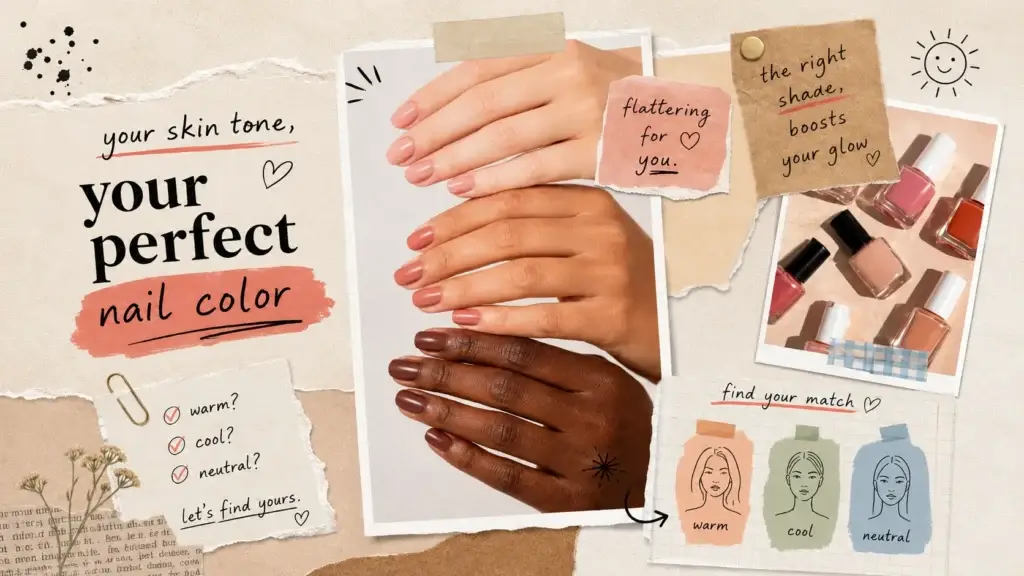
This distinction is the reason two people with identical-looking medium skin can suit completely different reds. Depth tells you how saturated a colour should be. Undertone tells you which direction it should lean. You need both, but undertone is the one that makes a polish look genuinely flattering rather than merely fine.
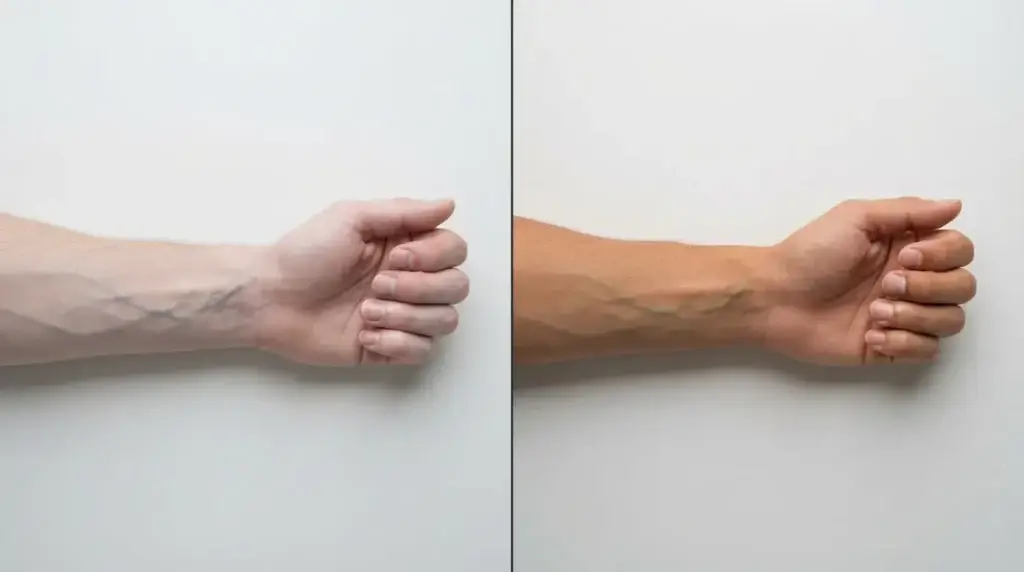
How to Find Your Undertone (Four Quick Tests)
Do at least two of these in natural daylight, not under a bathroom bulb. Indoor lighting is warm and will skew every result.
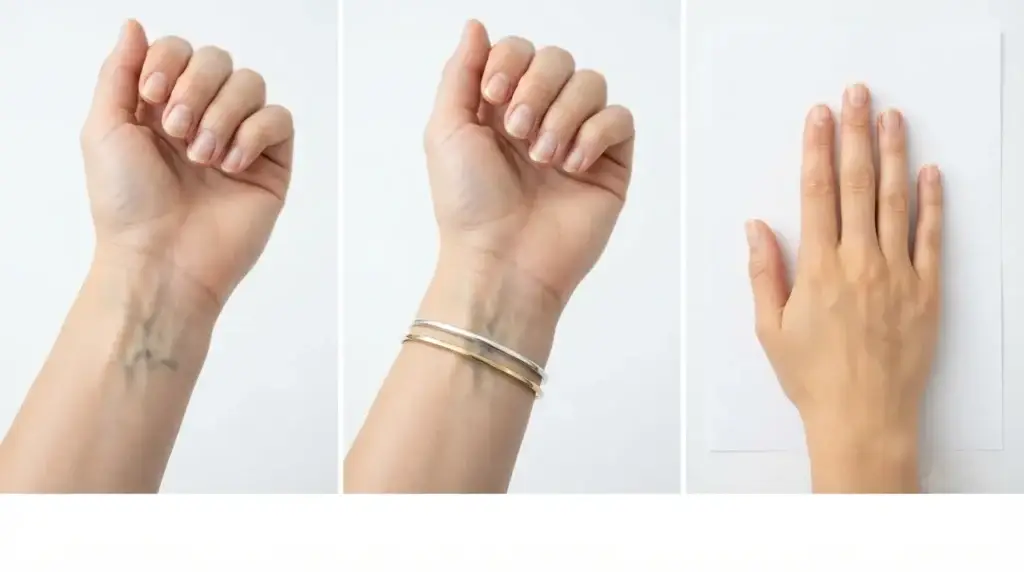
1. The vein test
Look at the inside of your wrist.
- Blue or purple veins → cool
- Green or olive veins → warm
- A mix, or genuinely hard to call → neutral
2. The jewellery test
Hold silver against your skin, then gold.
- Silver looks crisper and brighter → cool
- Gold makes your skin glow → warm
- Both look good → neutral
This is the most reliable single test for most people, and it’s a useful shortcut when choosing metallic polishes specifically.
3. The white paper test
Hold a sheet of plain white paper next to the back of your hand in daylight.
- Skin looks slightly pink or rosy → cool
- Skin looks golden or yellowish → warm
- No obvious shift → neutral
4. The sun test
Think about how your skin reacts to sun.
- Burns quickly, rarely tans → usually cool
- Tans easily, rarely burns → usually warm
- Burns first, then tans → often neutral
A note on olive skin: olive complexions often read as neutral or warm on these tests but have a distinct green undertone that behaves differently. If your tests come back contradictory and your skin has a slight green-gold cast, treat yourself as olive and use that section below.
Best Nail Colours for Fair Skin
Fair skin has less natural contrast against polish, so very heavy pigment can look stark. That’s not a rule against dark colours — it just means the version matters.
Fair skin with cool undertones
Wear: icy pink, lilac, dusty lavender, cherry red, raspberry, cool grey, navy, silver chrome, milky white. Approach carefully: bright orange, mustard yellow, and warm brick reds, which can pull a yellow cast into the skin. Best nude: soft pink-beige, one shade deeper than your fingertips.
Cool fair skin is where icy and frosted finishes genuinely shine. A pale blue or lilac reads as delicate rather than juvenile.
Fair skin with warm undertones
Wear: peach, coral, warm nude, soft caramel, brick red, olive green, gold chrome, warm taupe. Approach carefully: stark blue-toned pastels and cold greys, which can make warm fair skin look washed out. Best nude: peachy-beige or soft apricot.
Fair skin with neutral undertones
Wear: mauve, dusty rose, soft mocha, true red, sage, most pastels. Best nude: a straightforward beige-pink, the easiest nude category to shop for.
Depth tip for all fair skin: dark shades like black, deep navy and true burgundy absolutely work – keep the nails short to medium and the finish glossy. High contrast on a long nail is what tips the look from chic to severe.
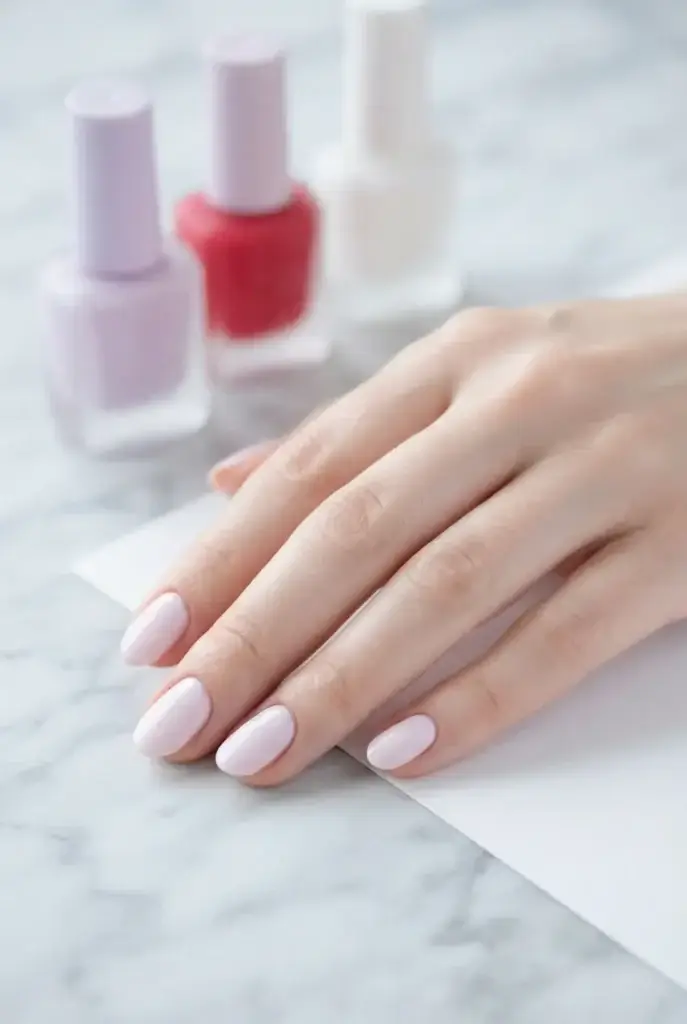
Best Nail Colours for Medium and Light-Medium Skin
Medium skin is the most flexible depth. It has enough contrast to carry saturated colour and enough warmth to hold neutrals without looking sallow.
Medium skin with cool undertones
Wear: berry, plum, fuchsia, cherry red, cool mauve, emerald, sapphire blue, pewter. Approach carefully: yellow-based beiges that can look muddy against cool medium skin. Best nude: rosy-beige or soft mauve-nude.
Medium skin with warm undertones
Wear: coral, terracotta, tomato red, warm caramel, bronze, mustard, burnt orange, warm chocolate. Approach carefully: very cool icy pastels, which can read as chalky. Best nude: golden beige or caramel latte.
Medium skin with neutral undertones
Wear: dusty rose, mauve, true red, chocolate brown, sage green, most jewel tones. Best nude: warm beige – one of the easiest matches on the market.
Medium skin is also where the sheer “your nails but better” look performs best, because milky pinks and translucent beiges sit close enough to the natural nail to look intentional rather than mismatched.
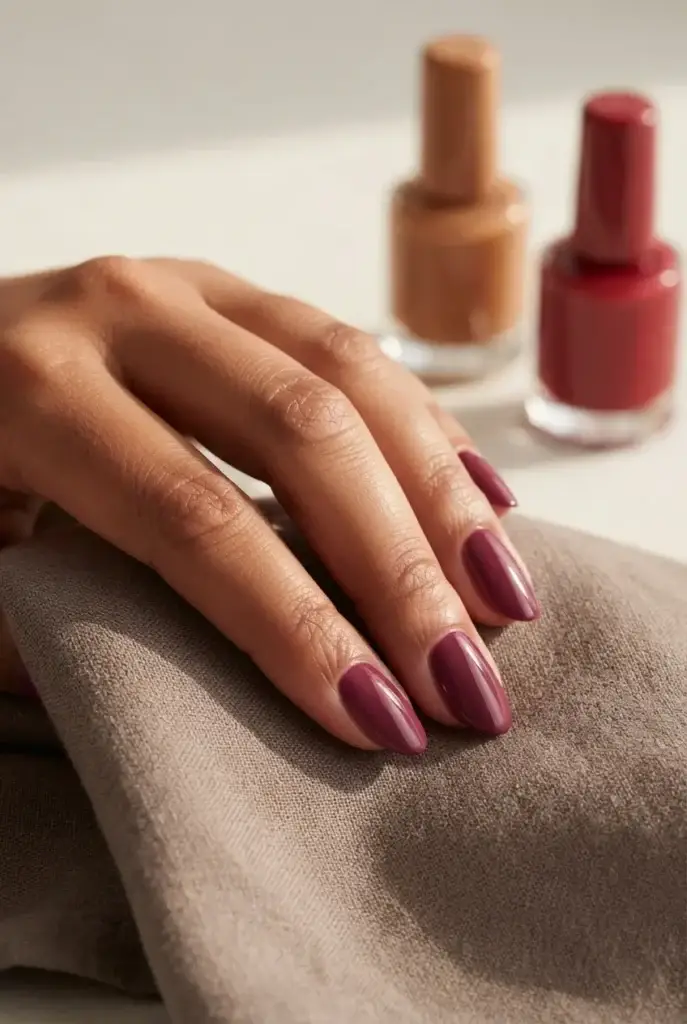
Best Nail Colours for Olive Skin
Olive skin has a subtle green-gold cast that changes how colour reads, and it deserves its own section rather than being folded into “medium.”
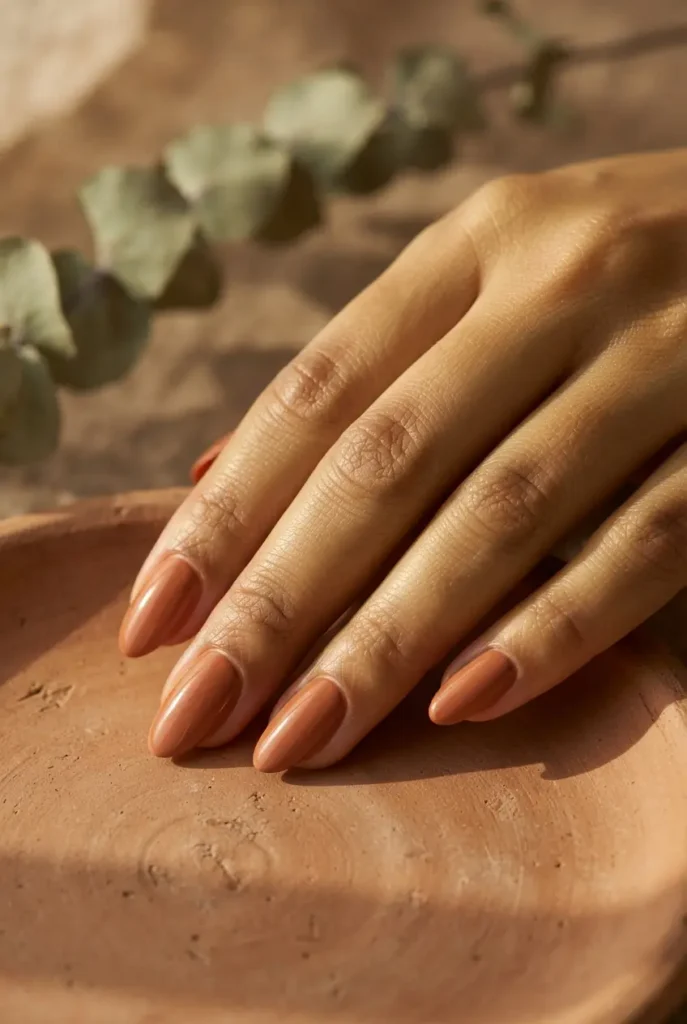
Wear: burnt orange, terracotta, burgundy, deep teal, forest green, warm brown, brick red, gold and bronze metallics, deep plum. Approach carefully: pale ashy nudes and greyish beiges – the two colours most likely to make olive hands look tired. Very yellow-based golds can also emphasise the green cast rather than balancing it. Best nude: honey beige or a warm caramel with a hint of brown, never grey-toned.
Olive skin looks particularly striking in earthy, spice-toned colours, which is why terracotta and rust have such a strong following among olive-toned wearers. Deep jewel tones – emerald especially – also create a beautiful contrast.
Best Nail Colours for Tan and Golden Skin
Tanned or naturally golden skin carries bright, high-saturation colour better than any other depth. Contrast is your advantage here.
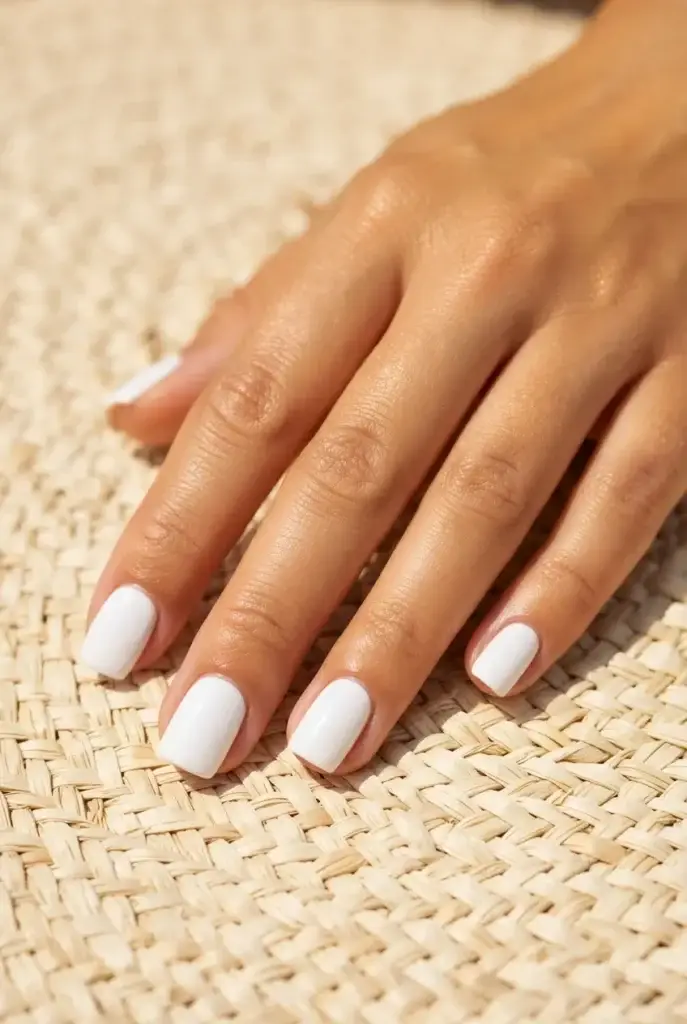
Wear: white, cream, bright coral, neon orange, turquoise, hot pink, cobalt, gold chrome, tangerine, lime.
Approach carefully: muddy mid-browns that sit too close to your own skin tone and disappear.
Best nude: caramel, toffee, or a soft milk-chocolate beige.
A crisp white manicure against tanned hands is one of the most consistently flattering combinations in nail styling. It’s the standard summer holiday choice for a reason.
Best Nail Colours for Deep and Rich Skin Tones
Deep skin has the widest range of any depth, and it holds high-pigment colour with a richness that lighter tones can’t replicate.
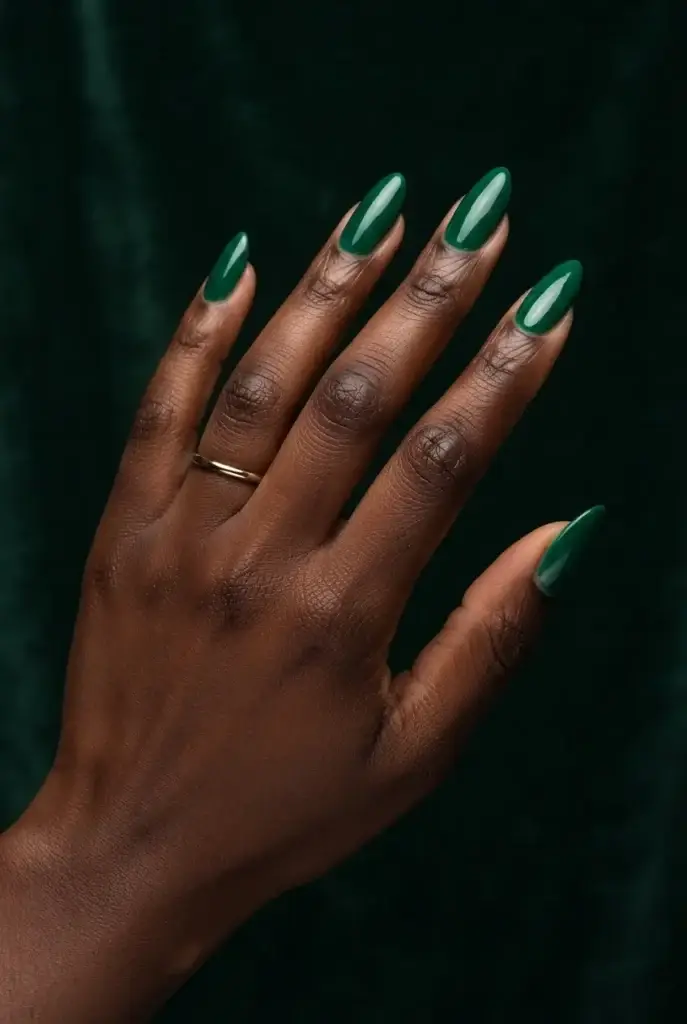
Wear: emerald, sapphire, cobalt, royal purple, burgundy, oxblood, true red, bright white, neon orange, hot pink, gold, bronze, copper chrome. Approach carefully: very pale, chalky pastels and ashy grey-beiges, which can read as flat or dusty against deep skin rather than soft. Best nude: mocha, deep caramel, chestnut or espresso – a nude on deep skin should be a rich brown, not a beige.
Deep skin with cool undertones leans into blue-reds, plum, wine, silver and cool berry. Deep skin with warm undertones sings in gold, copper, orange-red, amber and burnt sienna.
Metallics deserve a specific mention: gold, bronze and copper chromes look exceptional on deep skin because the reflected warmth harmonises rather than competes.
The Universal Shades: What Flatters Almost Everyone
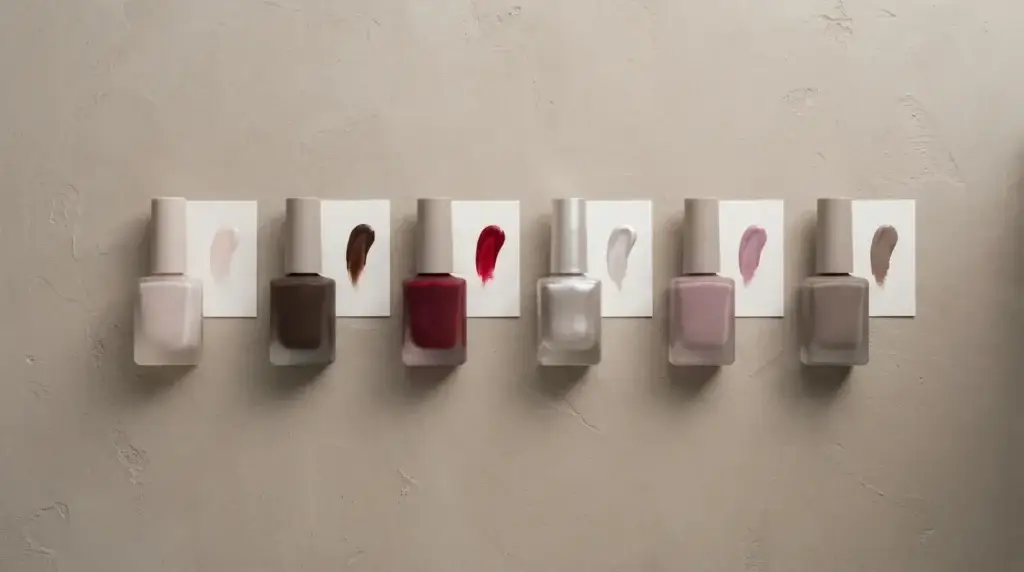
If you’re buying a gift, choosing a bridal party colour, or just want something that can’t go wrong:
| Shade | Why it works universally |
|---|---|
| Sheer milky pink | Sits close to every natural nail bed; adds shine, not colour |
| Deep chocolate brown | Neutral enough to flatter warm, cool and deep tones equally |
| Blue-based cherry red | The most widely flattering red direction across undertones |
| Pearl / glazed chrome | Reads as light rather than colour, so it can’t clash |
| Soft mauve | Sits exactly between warm and cool |
| True taupe | Balanced grey-brown that works on most depths |
Brown deserves a particular mention – it’s the single most undertone-flexible colour family available, which explains why the espresso, mocha and latte range has become such a staple.
How to Find Your Perfect Nude
The most common nail colour mistake is buying “nude” as if it’s one shade. A nude that suits one person will look like concealer on another.
The rule: your nude should be one to two shades deeper than your natural skin, echoing its undertone – not matching your skin exactly.
| Your skin | Your nude direction |
|---|---|
| Fair, cool | Soft pink-beige |
| Fair, warm | Peach-beige, apricot |
| Medium, cool | Rosy beige, mauve-nude |
| Medium, warm | Golden beige, latte |
| Olive | Honey beige, warm caramel |
| Tan | Toffee, warm caramel |
| Deep, cool | Cocoa, dusty chestnut |
| Deep, warm | Mocha, espresso, warm brown |
Two things that ruin a nude:
- Too grey. Ashy nudes drain almost every skin tone and are the most common cause of the “my hands look dead” reaction.
- Too close to your exact skin colour. Matching perfectly makes the fingers look blunt and cut off. A little deeper reads as intentional.
If you’re shopping online and can’t swatch, sheer and milky nudes are the safest bet – a translucent formula lets your own nail bed show through and self-corrects the match.
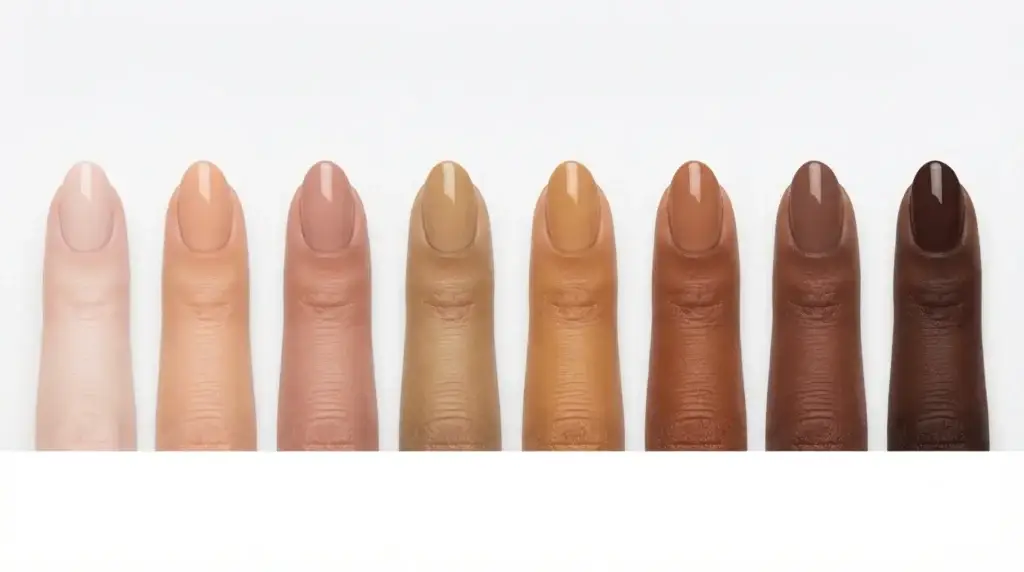
Finding Your Red: A Colour-Family Breakdown
Red is the shade people most often decide “doesn’t suit them” after buying the wrong version once.
| Red type | Leans | Best on |
|---|---|---|
| Cherry / blue-red | Cool | Cool and neutral undertones, all depths |
| Tomato / orange-red | Warm | Warm, olive and golden skin |
| Brick red | Warm | Olive, medium warm, tan |
| Burgundy / wine | Cool | Cool undertones, fair to deep |
| Oxblood | Neutral-deep | Deep skin, olive, autumn wearers |
| Scarlet / true red | Neutral | Almost everyone |
If you’ve only ever tried one red and disliked it, try one from the opposite temperature column before giving up on the colour entirely.
The same logic applies across every family: there’s a cool pink and a warm pink, a cool green and a warm green. The family isn’t the problem – the temperature is.
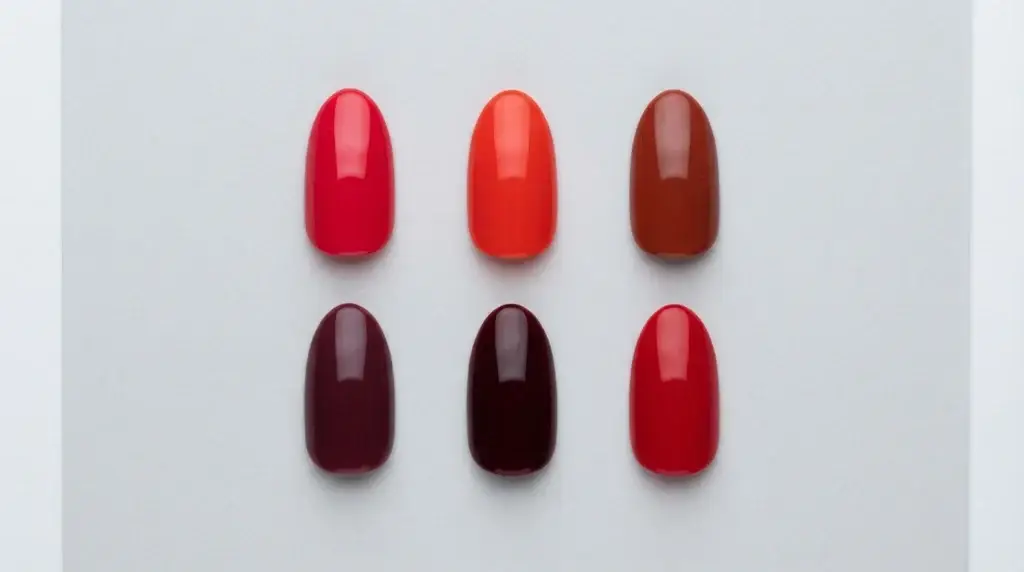
Finish Changes the Colour More Than You’d Expect
The same shade behaves like a different colour depending on its finish. This is the most overlooked variable in shade matching.
- Glossy cream – the truest version of the colour; highest contrast against skin.
- Sheer / jelly – softens and warms the colour with your own nail bed showing through; the most forgiving finish for anyone unsure of a shade.
- Matte – deepens and mutes; makes dark colours look softer and pastels look chalkier.
- Chrome / metallic – reflects surrounding colour, so it picks up your skin tone; pearl chrome is the most universally flattering metallic.
- Velvet / magnetic – adds a moving light stripe that lifts muted shades; excellent for making a dusty mauve or brown feel dimensional rather than flat.
- Shimmer – brightens the hand and is generally kinder to fair skin than a heavy flat cream.
Practical takeaway: if a shade is nearly right but slightly too intense, buy the sheer version rather than a different colour.
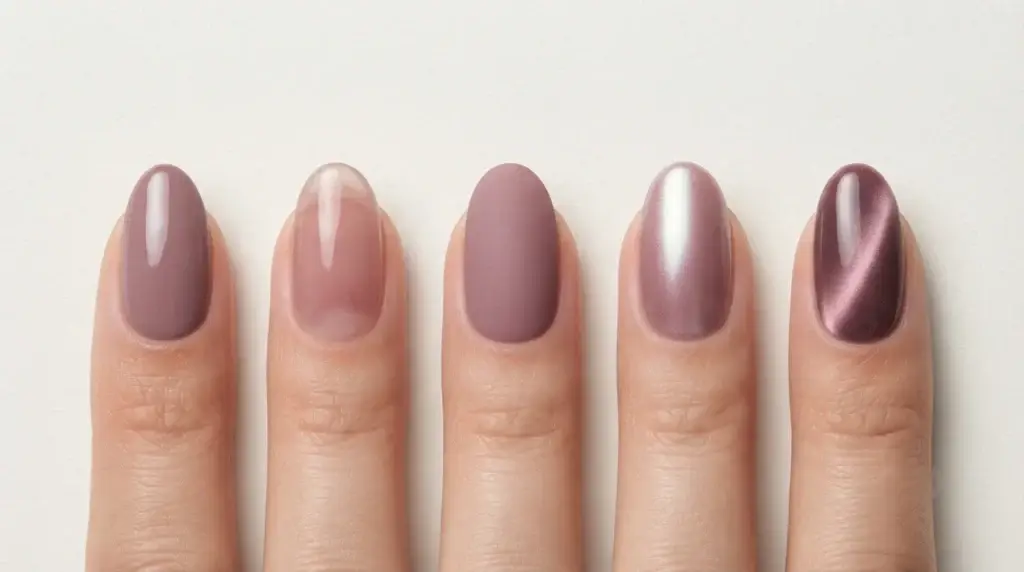
Nail Length and Shape Affect How Colour Reads
Colour never sits in isolation – the canvas shape changes the impression.
- Short nails carry bold and dark colours well because there’s less surface area, so the effect stays sharp rather than heavy.
- Long nails amplify saturation; dark colours on long nails read as high drama.
- Almond and oval shapes soften bold colours and elongate the fingers, which flatters every skin tone.
- Square shapes create clean, graphic contrast – excellent with white, black and mirror chrome.
- Very short or bitten nails look best in sheer, milky and pearl finishes, which draw less attention to length than high-contrast colour does.
If you’re nervous about a shade, try it on short almond nails first. It’s the most forgiving combination.
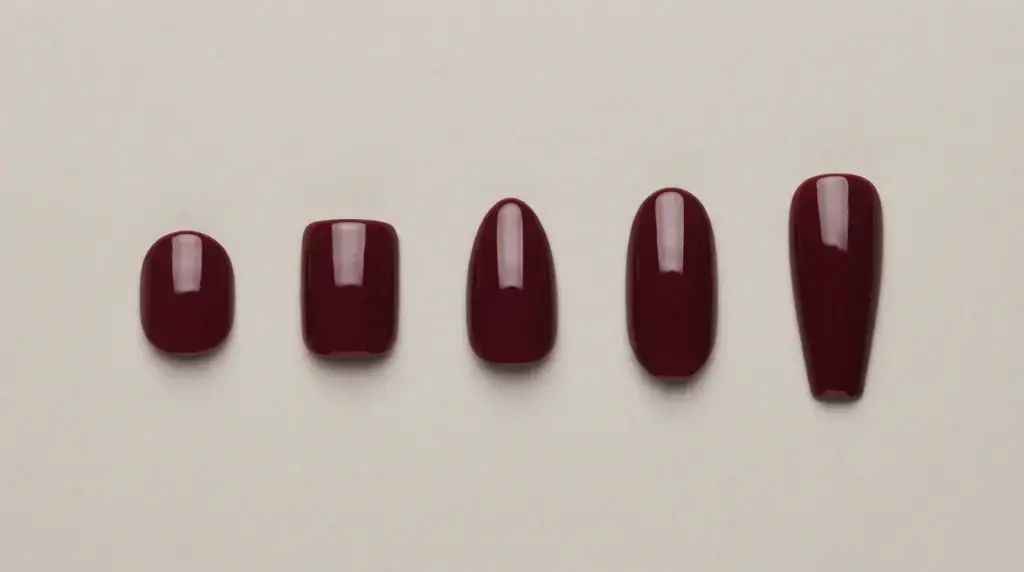
Season and Occasion: A Practical Shortcut
Undertone is fixed, but the shade you’d reach for shifts with context.
| Context | Cool undertone | Warm undertone | Deep skin |
|---|---|---|---|
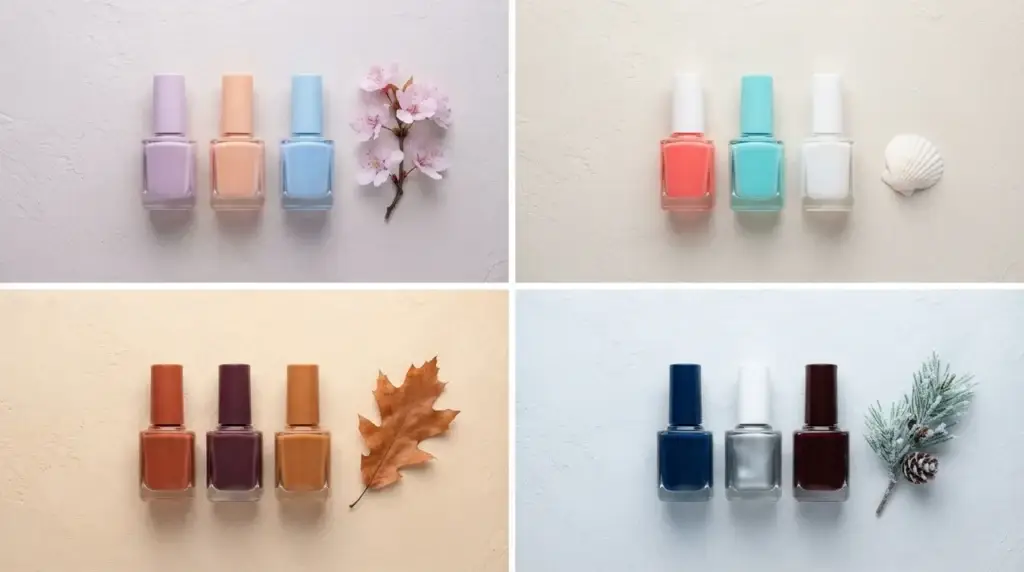
| Spring | Lilac, icy pink, sky blue | Peach, butter yellow, coral | Fuchsia, mint, bright white |
| Summer | Berry, cool white, aqua | Coral, tangerine, gold chrome | Neon orange, turquoise, cherry red |
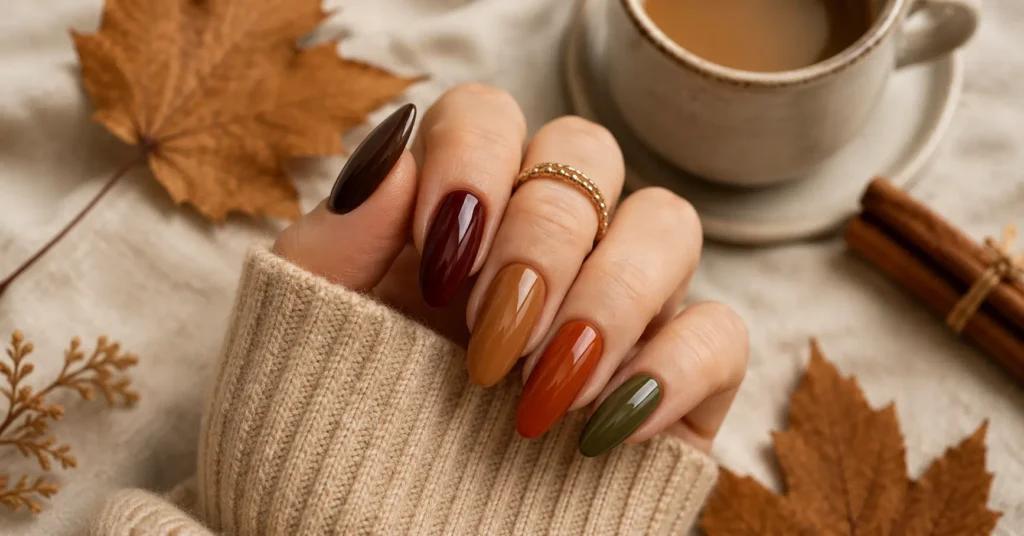
| Autumn | Plum, wine, cool grey | Terracotta, caramel, olive | Copper, oxblood, chocolate |
| Winter | Navy, silver chrome, burgundy | Chocolate, bronze, brick | Emerald, gold chrome, deep plum |
| Office | Milky pink, taupe | Peach nude, latte | Mocha, chestnut |
| Wedding guest | Pearl chrome, soft lilac | Rose gold chrome, blush | Glazed pearl, deep nude |
| Night out | Cherry red, silver mirror | Copper, tomato red | Emerald, gold chrome, hot pink |
Your skin does shift slightly with the seasons – a summer tan can make a nude that worked in January suddenly disappear against your hand. Undertone stays the same, so the direction holds; you may just need to go a shade or two deeper in summer.
Common Mistakes to Avoid
- Judging polish in the bottle. Bottle colour and nail colour differ significantly, especially in sheer and nude formulas. Swatch on a nail or a false tip.
- Testing under shop lighting. Retail and salon lights are warm and heavily flattering. Take your hand to a window before deciding.
- Buying a nude that matches your skin exactly. It blunts the fingers. Go one to two shades deeper.
- Choosing greyish, ashy shades if you have olive or deep skin. These are the most common cause of dull, tired-looking hands.
- Assuming a colour family is off-limits. Nine times out of ten, it’s the temperature of that particular shade, not the colour itself.
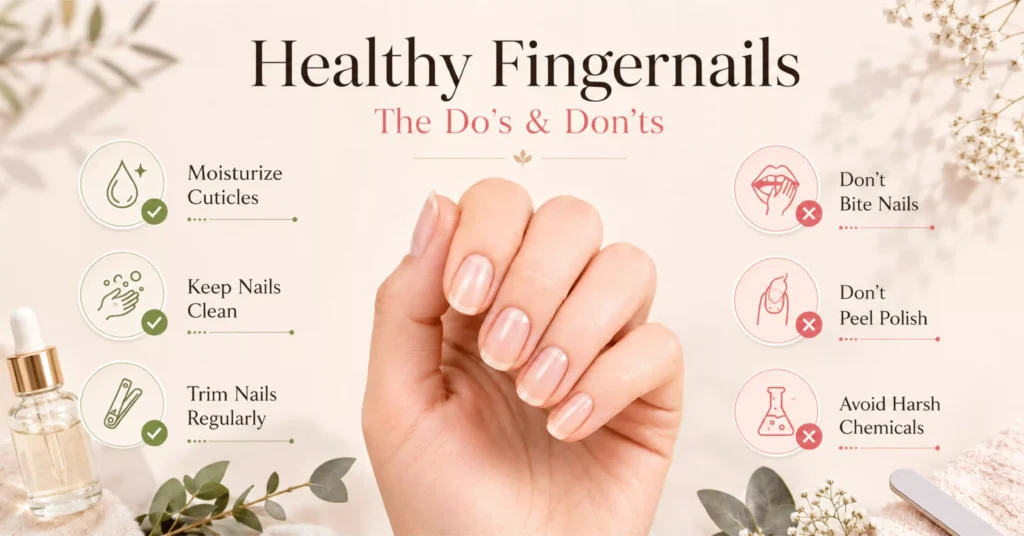
- Ignoring your hands’ condition. Dry cuticles, redness and uneven skin change how every colour reads. A minute with cuticle oil and hand cream improves the result more than switching shades.
- Forgetting the base coat on dark or pigmented colours. Deep reds, blues and plums stain natural nails. A proper base coat prevents the yellowing that then makes every future nude look wrong.
How to Test a Shade Properly Before Committing
Salons and shops both encourage impulse decisions. This method takes three minutes and saves a lot of wasted polish.
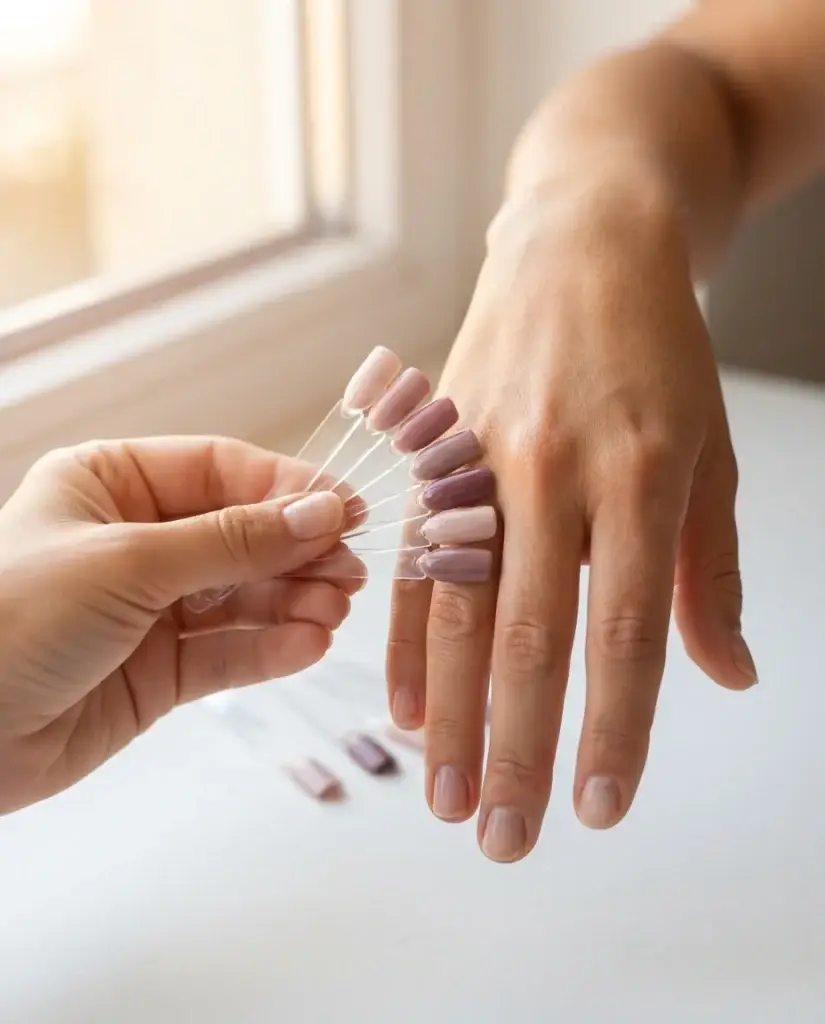
- Swatch on false tips, not the bottle. Keep a pack of clear press-on tips and paint sample tips of shades you’re considering.
- Hold the tip against your ring finger, not your palm. The back of the hand is the relevant skin.
- Check in daylight near a window. Then check again under indoor light – a shade that only works in one lighting condition isn’t a keeper.
- Look at the whole hand from arm’s length. Fixating on one nail hides the overall effect.
- Consider what you actually wear. A shade that clashes with 80% of your wardrobe won’t get used, however flattering it is in isolation.