Your nails can be a surprising little window into your overall health – and most of the time, keeping them strong doesn’t require anything fancy. Dermatologists tend to recommend the same straightforward habits over and over, because they genuinely work. Here are twelve of them, with the reasoning behind each so you know why it matters, not just that it does.
1. Keep Your Nails Clean and Dry
Bacteria and fungi thrive in moisture, and the spot just under your nail is a favorite hiding place. Drying your hands and nails thoroughly after washing is one of the easiest ways to keep infections from taking hold.
2. Trim Straight Across
Use sharp clippers or nail scissors and cut straight across, then round only the tips slightly. This keeps the nail at its strongest and reduces the chance of an ingrown edge, which happens more easily when you cut nails into a deep curve.
3. File With a Glass or Crystal File
How you file matters as much as how you cut. A glass or crystal file leaves a smooth, sealed edge, while rough cardboard emery boards can create tiny tears that lead to splitting and peeling. File gently in one direction.
4. Leave Your Cuticles Alone
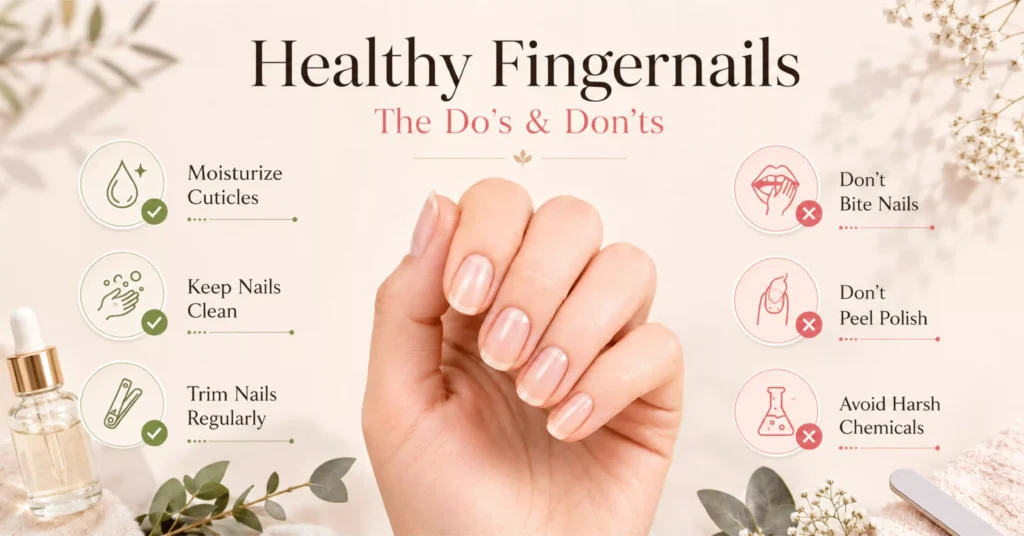
This is the tip dermatologists feel most strongly about. Your cuticle is a living seal that blocks bacteria and fungi from reaching the nail’s growth area. Cutting it removes that protection and invites infection. Gently pushing cuticles back after a shower is fine — trimming them away is not.
5. Use Cuticle Oil Daily
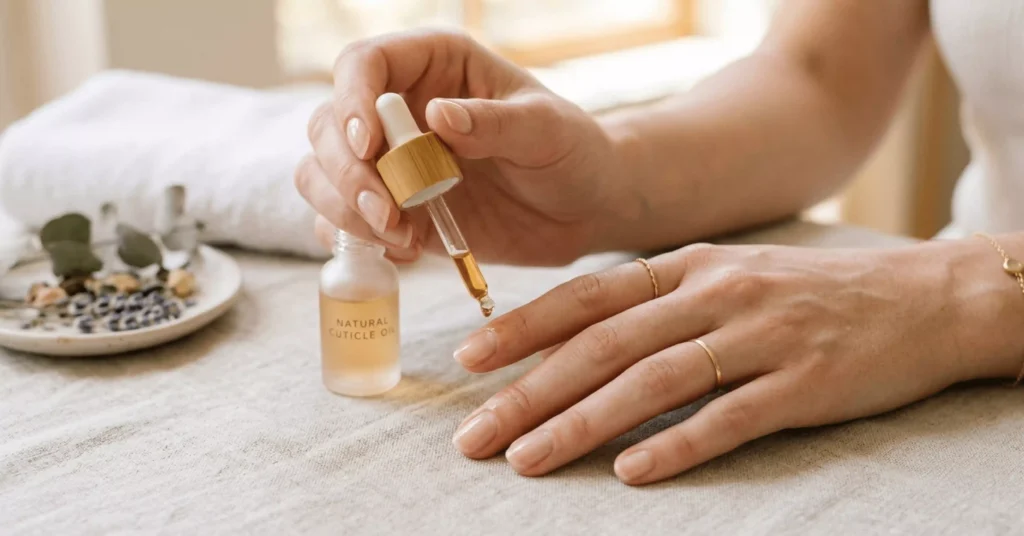
A daily drop of cuticle oil massaged into the nail and surrounding skin keeps everything hydrated, helps prevent hangnails, and supports the nail as it grows. Almost any skin-safe oil works; jojoba and grapeseed are popular choices.
6. Moisturize Your Hands and Nails
Nails get dry and brittle just like skin. Apply a hand cream after every wash, paying attention to the nails themselves. A thicker cream generally hydrates longer than a thin lotion.
7. Wear Gloves Around Water and Chemicals
Nails absorb water far more than skin does — think of them like little sponges. Repeatedly soaking and drying weakens them, so wear rubber gloves for dishes, cleaning, and gardening, and keep cleaning chemicals off your nails.
8. Go Easy on Acetone Remover
Acetone strips moisture and dries out both the nail and the skin around it. Limit how often you remove polish, and choose an acetone-free formula when you can.
9. Don’t Bite or Pick
Nail biting and picking at the surrounding skin damage the nail bed, open the door to bacterial and fungal infections, and can even spread warts. If it’s a stubborn habit, a bitter-tasting polish can help retrain you.
10. Stop Using Your Nails as Tools
Opening cans, scratching off labels, prying things apart — these are reliable ways to chip, split, or lift a nail. Reach for an actual tool instead and your nails will thank you.
11. Use a Base Coat and Take Polish Breaks
A base coat protects against staining and helps polish last. And going polish-free for a few days now and then lets you check on the health of the nail underneath and let it recover from any drying products.
12. Eat for Nail Health
Nails are built from protein, so a balanced diet with enough protein, iron, and overall nutrients supports steady growth. Whole foods do more here than most supplements — see the FAQ before reaching for pills.
How Long Until You See Results
Be patient — nail improvements are slow by nature. Dermatologists note that visible change typically takes two to six months, because that’s how long it takes a brand-new, healthier nail to grow all the way out. A strengthener or new routine isn’t “not working” at week two; the nail simply hasn’t grown out yet.
Signs You Should See a Dermatologist
Book a visit if you notice a color change across the whole nail or a new dark streak, a change in shape or thickness, pits or dents in the surface, the nail separating from the skin, or any swelling, bleeding, or pain. If you have diabetes or poor circulation, treat nail problems early, since they can become more serious.
Your nails can be a surprising little window into your overall health — and most of the time, keeping them strong doesn’t require anything fancy. Dermatologists tend to recommend the same straightforward habits over and over, because they genuinely work. Here are twelve of them, with the reasoning behind each so you know why it matters, not just that it does.
Frequently Asked Questions
Are gel and acrylic nails bad for you?
They’re not off-limits, but frequent or back-to-back applications – and especially aggressive removal – can weaken the natural nail over time. Give your nails occasional breaks, and have gels soaked off properly rather than picked off.
Do nail strengtheners actually work?
They can help reinforce weak or peeling nails, but results take time and vary by person. Look for treatments aimed at hydration and bonding rather than “hardeners” used too often, which can sometimes make nails brittle.
What's the best vitamin for nails?
Biotin is the one most often mentioned, but the evidence is limited unless you’re actually deficient. A balanced diet usually covers what nails need. Check with a doctor before starting supplements.
Final Thoughts
None of these tips are complicated, and that’s the point — strong nails come from doing the simple things consistently. Keep them clean and dry, hydrate, leave your cuticles alone, protect them from water and chemicals, and give them time.
For more, see our step-by-step at-home nail care routine, our full do’s and don’ts guide, and our breakdown of how to care for your specific nail type.
This article is general information, not medical advice. See a board-certified dermatologist for any nail change that concerns you.