If your nails split, peel, or bend the moment they get any length, you’re not doing anything wrong – nails are genuinely delicate, and everyday life is hard on them. Water, cleaning products, cold weather, and over-enthusiastic manicures all chip away at their strength over time.
The good news is that stronger nails mostly come down to a few simple habits, repeated. Here are seven worth building, plus realistic expectations for how long they take to pay off.
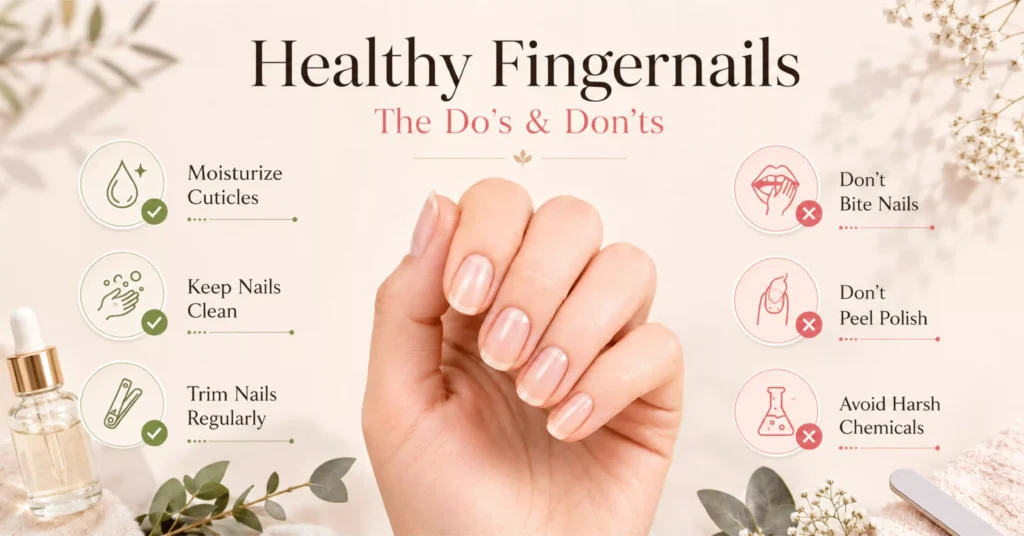
1. Protect Your Cuticles (Don’t Cut Them)
Your cuticle is a tiny but important seal that keeps bacteria and fungi out of the area where your nail grows. Cutting it — even at the salon — removes that protection and can leave the nail open to infection and damage. Instead, soften cuticles in warm water or with a drop of oil and gently push them back with a wooden stick. Leave the clippers for the nail itself.
2. Moisturize and Use Cuticle Oil Daily
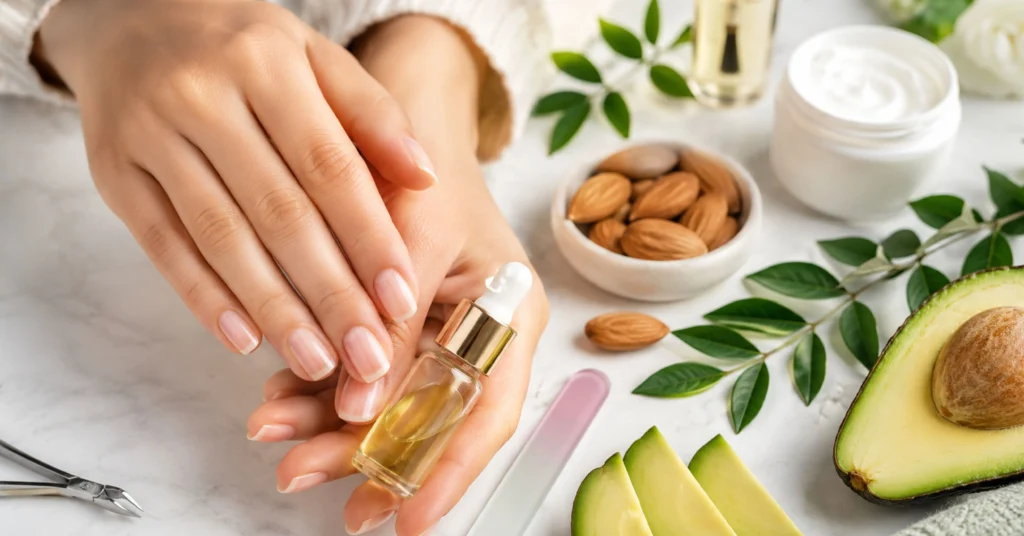
Brittle nails are very often dry nails. A daily habit of massaging cuticle oil into each nail and following with a hand cream keeps the nail flexible so it bends instead of snapping. Do it after every hand wash if you can, and keep a small bottle of oil at your desk or in your bag.
3. Wear Gloves for Wet and Dirty Work
Nails absorb water far more readily than skin, and every soak-and-dry cycle weakens them a little more. Slipping on rubber gloves for dishwashing, cleaning, and gardening protects your nails from both the water and the harsh chemicals – it’s one of the highest-impact habits on this list.
4. Trim Straight and File Smart
Keep nails trimmed straight across with sharp clippers, rounding only the tips. Then shape with a glass or crystal file rather than a rough emery board: glass files leave a smooth, sealed edge, while cheap files cause tiny tears that turn into splits and peeling. File gently and in one direction.
5. Break the Biting Habit
Nail biting and picking damage the nail bed, invite infection, and keep your nails too short and stressed to ever strengthen. It’s a hard habit to quit, but a bitter-tasting polish, keeping your hands busy, and keeping nails neatly filed (so there’s nothing to catch on) all genuinely help.
6. Buff Gently – and Rarely
A light buff can smooth ridges and add a little shine, but it’s easy to overdo. Buffing too often thins the nail plate, which makes nails weaker, not stronger. Treat it as an occasional finishing touch, not a regular step, and use a soft buffer with a light hand.
7. Feed Your Nails From the Inside
Nails are made of protein, so they reflect your overall nutrition. A balanced diet with enough protein, iron, and general nutrients gives your body what it needs to grow strong nails, and staying hydrated helps too. Whole foods matter more here than supplements for most people.
Why Are My Nails So Weak?
Most weak, bendy, or peeling nails come down to a few usual suspects: too much water exposure, harsh chemicals (including frequent acetone remover), repeated gel or acrylic applications without breaks, dry winter air, and simply getting older, since nails can lose some flexibility with age. Often it’s a combination, which is why a few habit tweaks across the board tend to help more than any single product.
How Long Until Your Nails Get Stronger
Set your expectations for months, not days. Because nails grow slowly – roughly the time it takes to fully replace a nail is two to six months – that’s how long it takes to see real improvement. Any new routine is working on the nail growing in now, not the damaged length already on your fingers. Stick with it and let the healthier nail grow out.
When Weak Nails Mean Something More
Occasionally, persistently brittle or changing nails can point to a nutritional deficiency, a thyroid issue, or another underlying condition. If your nails stay weak despite good habits, or you notice color changes, dark streaks, separation from the skin, or pain, it’s worth seeing a dermatologist to rule anything out.
Frequently Asked Questions
Does water really weaken nails?
Yes. Nails are far more absorptive than skin, and repeatedly swelling and shrinking with water exposure stresses the keratin layers, leading to weakness and breakage. Gloves for wet tasks make a real difference.
Do nails need to "breathe"?
Not literally — they get everything they need from your blood supply, not the air. But taking occasional breaks from polish is still smart so you can monitor the nail and let it recover from drying removers.
Will biotin fix my weak nails?
Maybe, if you’re actually deficient – but the evidence is limited for most people, and a balanced diet usually covers it. Check with a doctor before starting any supplement.
Final Thoughts
Strong nails are built on boring consistency: protect your cuticles, keep nails moisturized, glove up around water, file gently, and give it time. Do that for a couple of months and you’ll likely see nails that bend less and break far less often.
For more, see our full do’s and don’ts of nail care, our dermatologist-approved tips, and our guide to caring for your specific nail type if yours are soft, peeling, or ridged.
This article is general information, not medical advice. See a board-certified dermatologist for nails that stay weak or change noticeably.