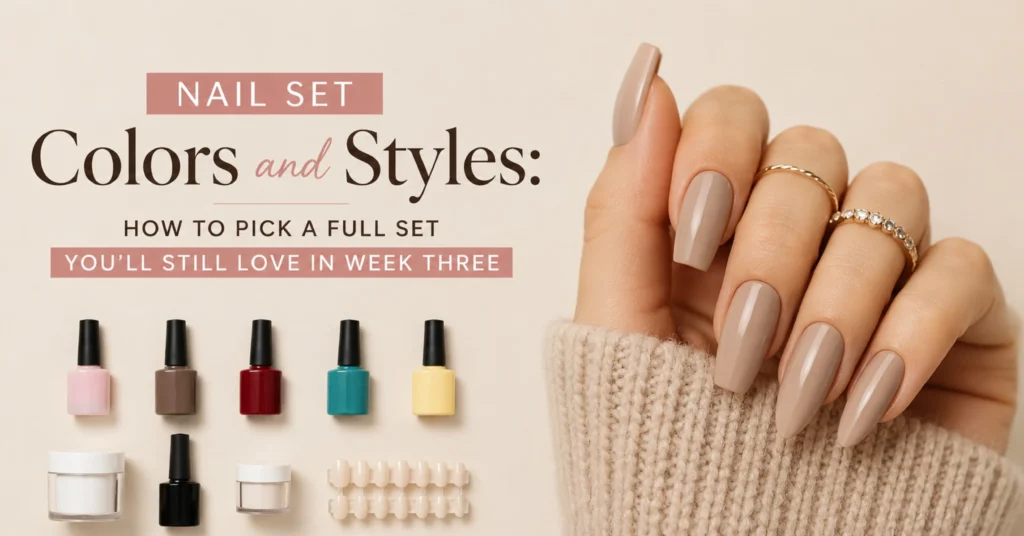
Most nail regret happens on day nine.
Not at the salon – at the salon everything looks incredible under those lights, and you’re still floating on the smell of fresh acetone and someone else massaging your hands. The regret arrives later. It arrives when you can’t peel a sticker off a parcel, or when the deep plum you chose in October light turns out to look grey against your skin every single morning, or when the square tips you loved start catching on your sweater sleeve.
The strange thing is that almost nobody chooses a nail set the way they’d choose a haircut. A haircut gets discussed. A nail set gets picked in ninety seconds from a screenshot, while a technician waits.
This guide is the ninety seconds’ worth of thinking, done in advance. Shapes, lengths, the colours that are genuinely everywhere in 2026, what a full set really costs, and – the part almost no inspiration post covers – which combinations of colour and shape actually hold up on a real pair of hands during a real week.
What a “Nail Set” Actually Means
A nail set is a complete manicure applied to all ten fingers, built from four separate choices: the shape of the tip, the length, the colour and finish, and the enhancement type used to create it – acrylic, gel, dip powder, or press-on. When someone says “full set,” they usually mean new extensions applied to all ten nails rather than a fill on nails they already have.
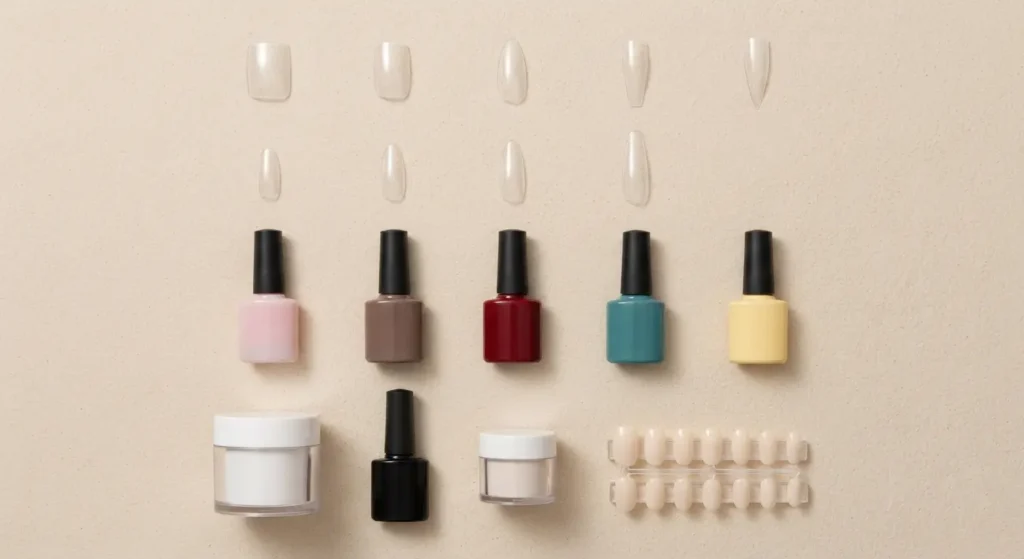
That’s the whole vocabulary, and it matters more than it sounds, because the four choices are not equally reversible:
- Enhancement type is the biggest commitment. It determines cost, appointment length, and how you’ll eventually remove the set.
- Shape is the second biggest. Once acrylic is sculpted into a coffin taper, you’re not switching to round without filing the whole thing down.
- Length is semi-fixed. You can shorten a long set; you cannot lengthen a short one without adding product.
- Colour is the cheapest to change and the one everyone agonises over most.
Notice the inversion. People spend their entire decision budget on the reversible choice and almost none on the permanent ones. Flipping that order is most of what separates a set you love from a set you tolerate.
The Nail Shapes That Define Every Set
Nail shape is the silhouette of the tip, and it does more visual work than colour does. A short milky-pink squoval and a long milky-pink stiletto are the same colour and read as two completely different personalities.
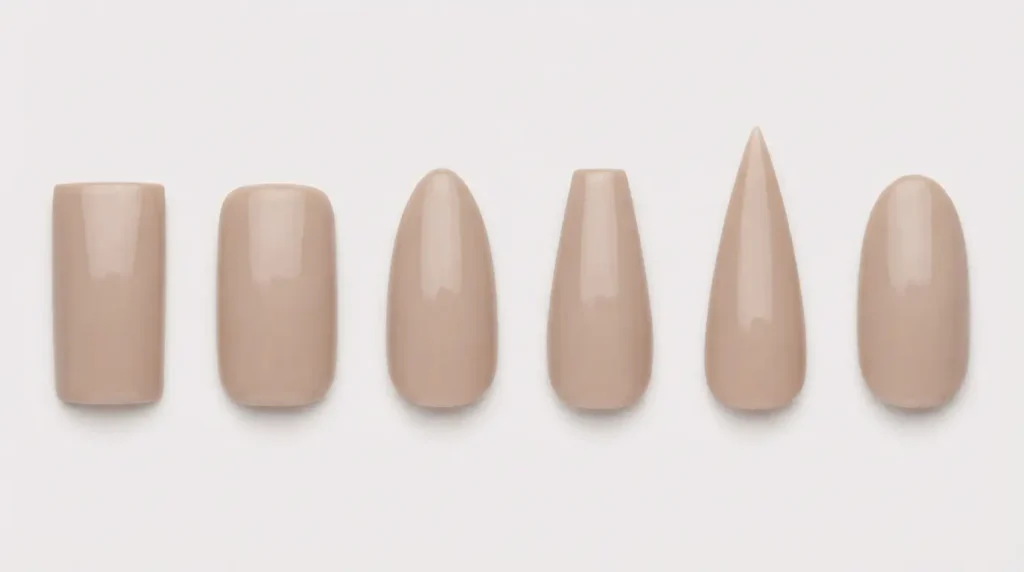
Square is filed straight across with sharp corners. It’s crisp, structured, and the backbone of the look people mean when they say a baddie square nail set – long square tips, high gloss, usually one saturated colour or a bold French. Those sharp corners are also the shape’s weakness: they catch on fabric and chip at the edges more than a curve does.
Squoval is a square with the corners softened. It is the quiet workhorse of the shape world – nearly all of square’s clean geometry with almost none of its snagging problem.
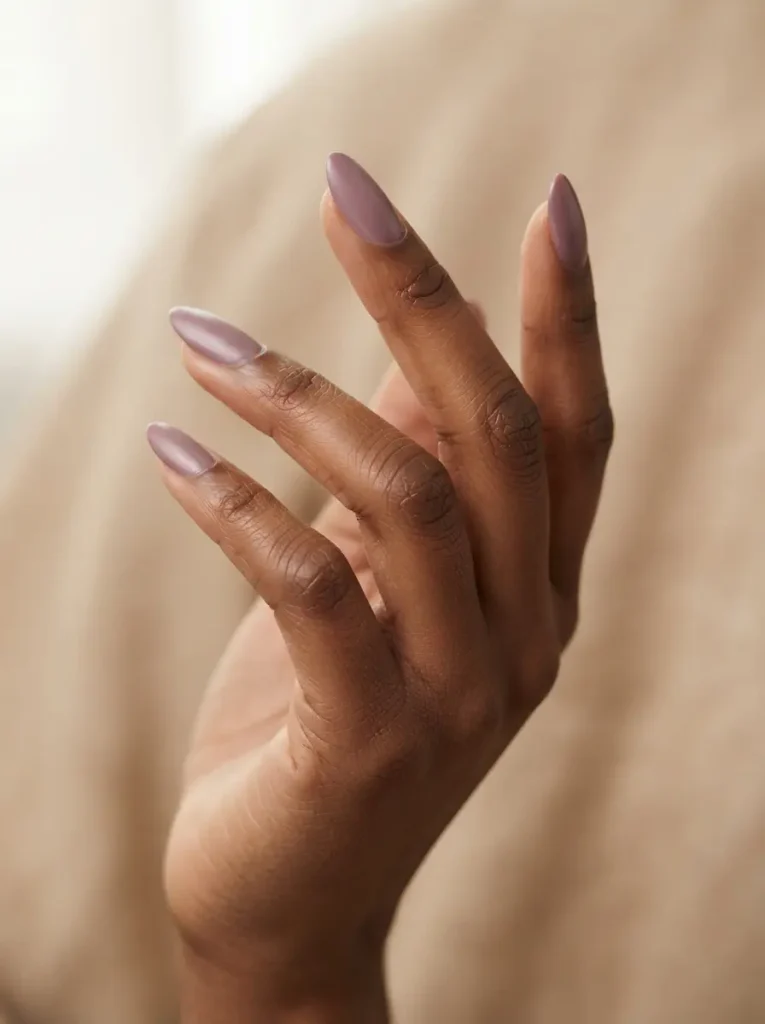
Almond tapers from a wide base to a rounded point, like the nut. It’s the shape most technicians reach for when someone says “I want my hands to look elegant,” because the taper visually lengthens the finger.
Coffin (also called ballerina) tapers like an almond but is then cut flat across the tip. It needs length to exist at all – on short nails there’s simply not enough runway to build the taper – so it’s almost always an extension.
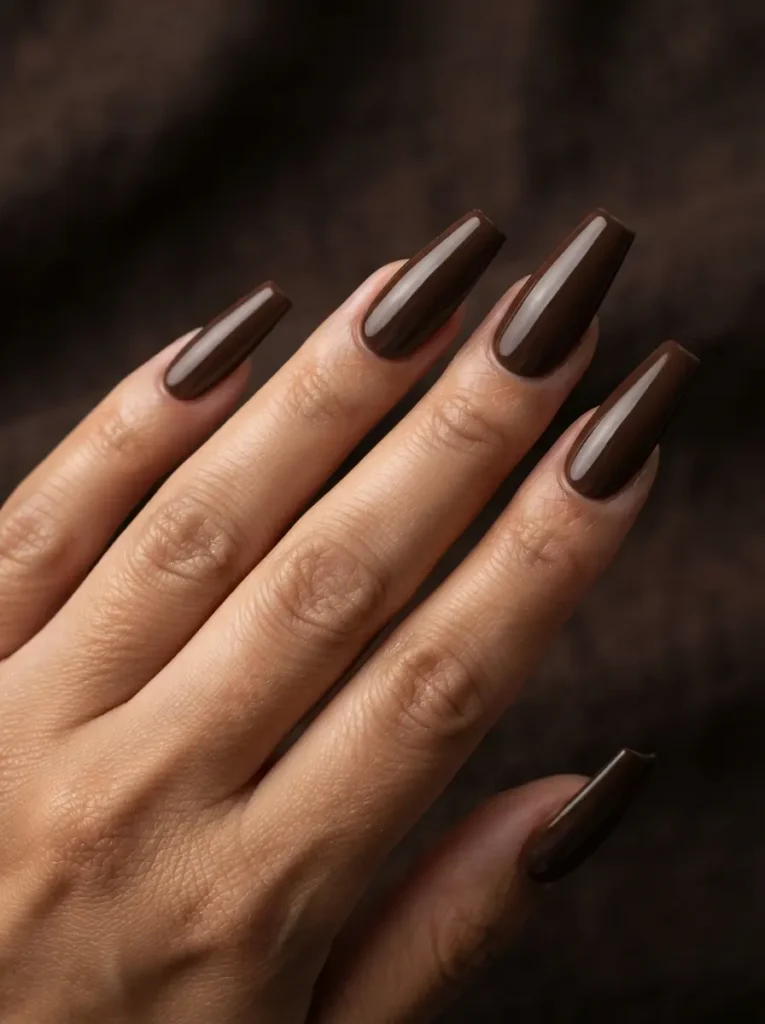
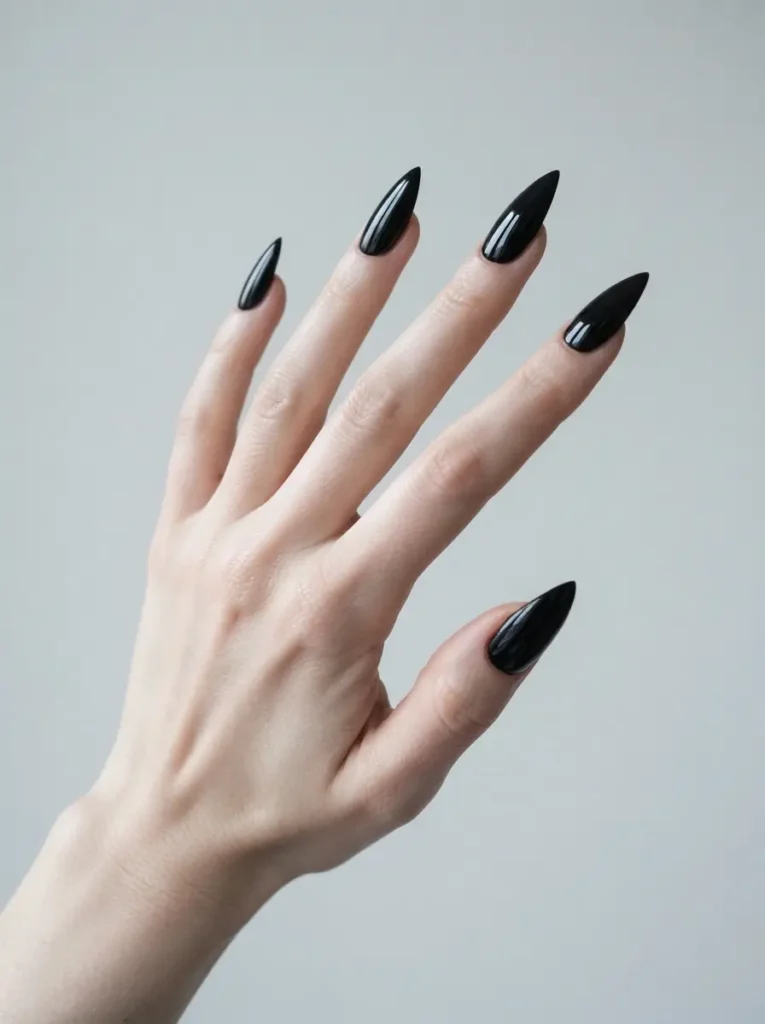
Stiletto tapers to an actual point. It photographs beautifully and functions terribly. This is a shape for people who genuinely don’t mind adapting how they use their hands.
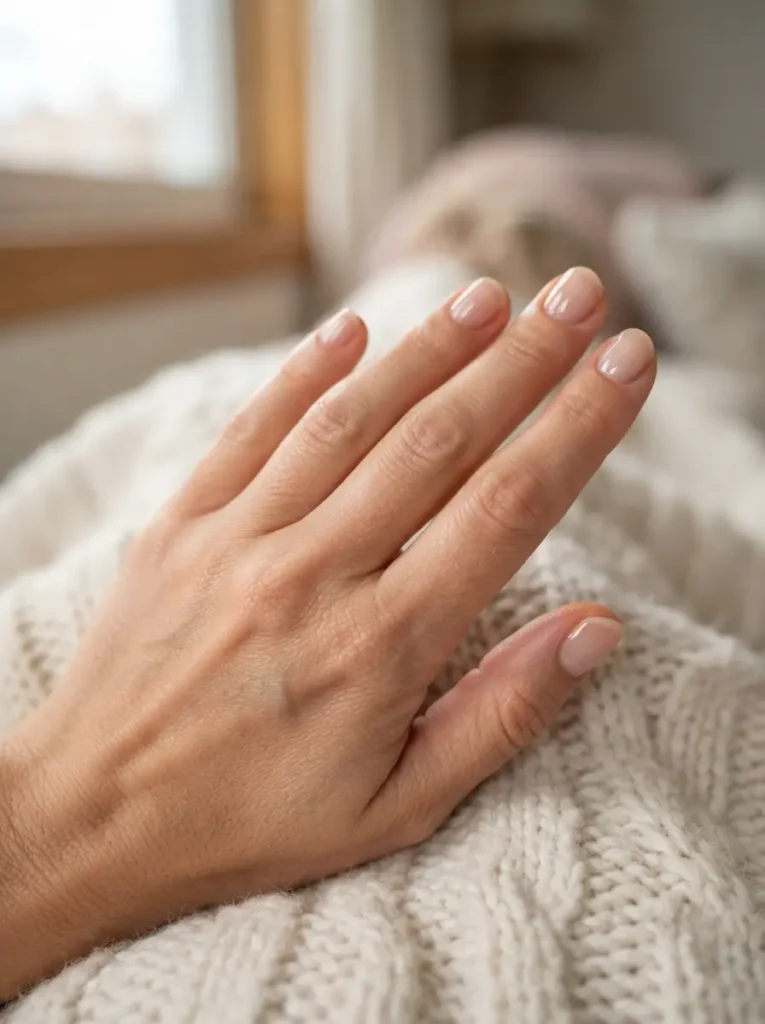
Round and oval follow the natural curve of the fingertip. They’re the least dramatic and by far the most forgiving, especially on nails that are prone to splitting.
| Shape | Reads as | Durability | Works on short nails? |
|---|---|---|---|
| Square | Sharp, bold, modern | Medium – corners chip | Yes |
| Squoval | Clean, versatile, safe | High | Yes |
| Almond | Elegant, elongating | Medium | Only with extension |
| Coffin | Dramatic, fashion-forward | Medium-low | No |
| Stiletto | Statement, editorial | Low | No |
| Round/oval | Natural, understated | High | Yes |
If you take one thing from this table: squoval is the shape you pick when you’re not sure. It is genuinely hard to regret.
How to Match a Nail Shape to Your Actual Hands
The right shape depends on the proportions of your fingers and nail beds, not on what’s trending. The shape guide from Kester Black lays out the logic clearly, and it comes down to visual balance — you’re either adding width or taking it away.
- Long fingers with narrow nail beds → square, squoval, or coffin. Straight edges add visual width and stop long fingers reading as spindly.
- Wide nail beds → almond or oval. The inward taper narrows the nail visually, which is why these shapes make broad nails look slimmer than they are.
- Short fingers → almond, oval, or squoval. Anything with a taper or a curve pulls the eye lengthwise. Long square tips on short fingers tend to read as stubby rather than bold.
- Weak, thin, or splitting nails → round or squoval. Both spread pressure across the tip instead of concentrating it at a point, which is exactly where a compromised nail breaks.
- Wider palms → stiletto is genuinely an option here. The width of the palm anchors the drama; on a narrow hand the same shape can look disproportionate.
Kester Black’s guide also notes that squoval suits the widest range of hand types of any shape – a useful fact if you’re choosing for a wedding party or anyone whose hands you can’t see in advance.
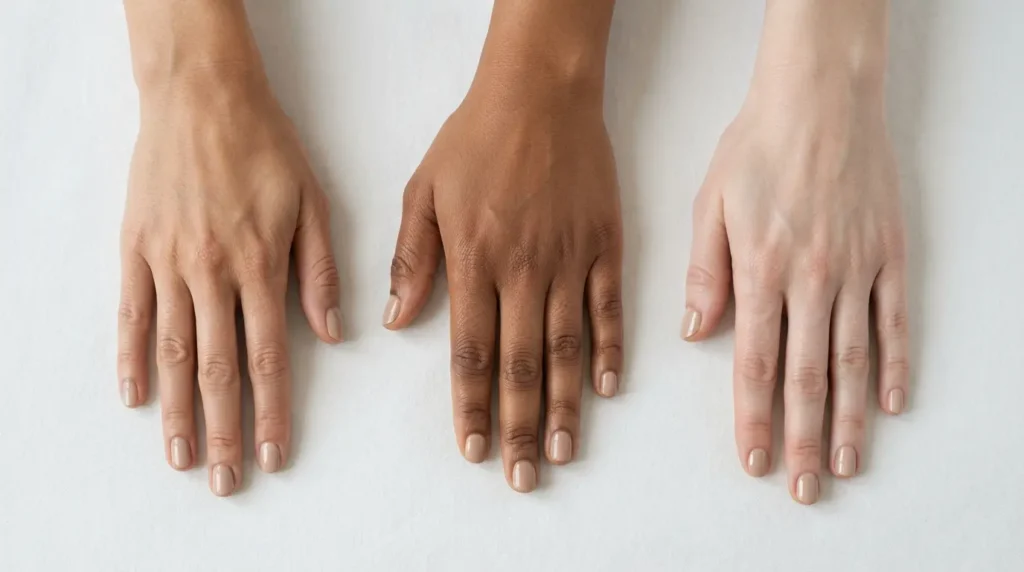
One practical test before you commit: take a photo of your hand with your fingers relaxed, not splayed. Splayed fingers lie. Relaxed fingers are how people actually see your hands.
Nail Set Colours That Are Actually Working in 2026
The dominant story in 2026 nail colour is soft but expensive – colour that looks considered rather than loud. Here’s what the trend reporting actually shows, grouped by family.
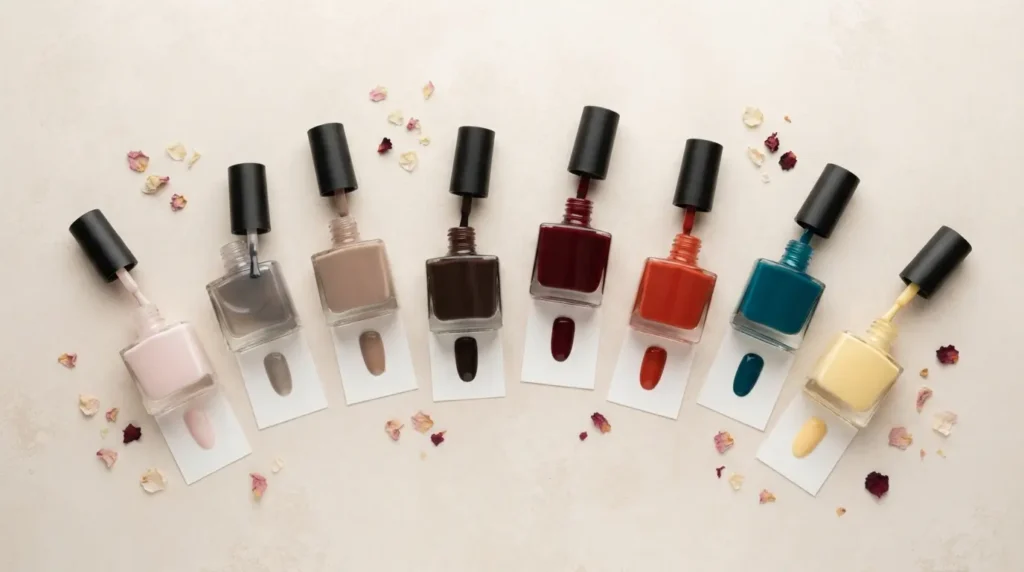
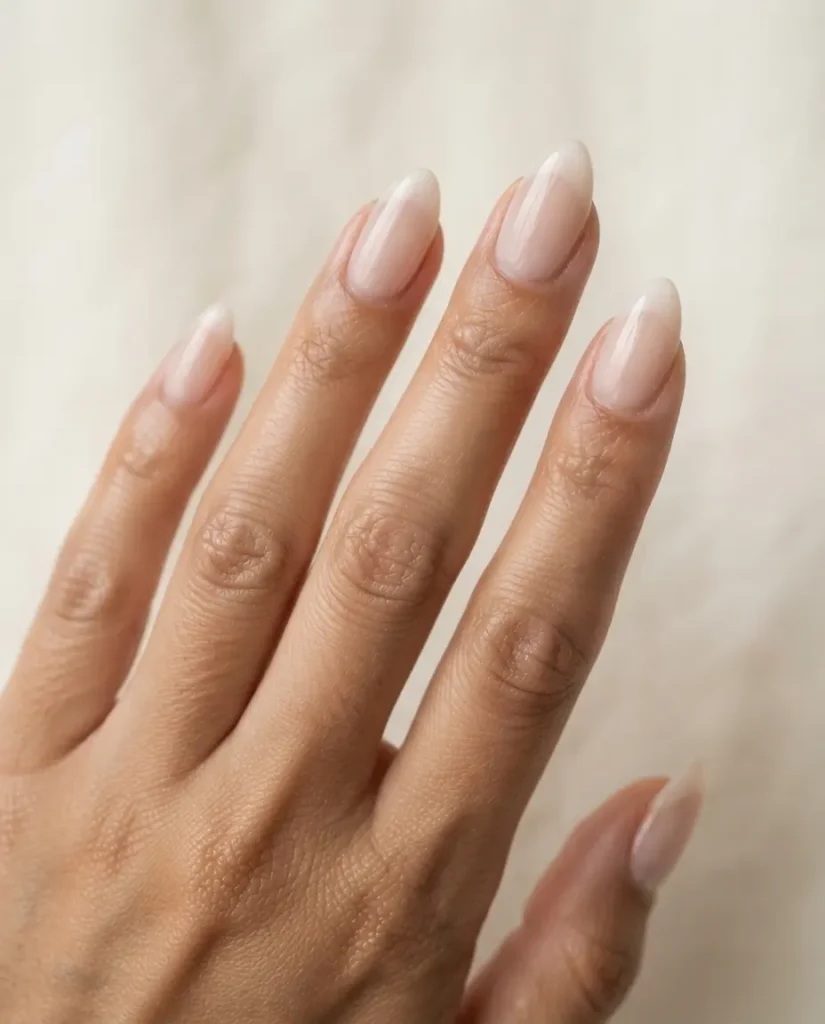
Sheer and milky shades. Glamnetic’s 2026 trend report puts sheer, milky finishes near the top of the year – including a smoky sheer and ballet-style pinks that sit like a veil over the natural nail. These are the shades behind the “clean girl” look and the reason milky pink is now the default office manicure. The Zoe Report notes a related development: a hidden French, where the tip is blended in milky or nude tones instead of stark white, which visually lengthens the nail without announcing itself.
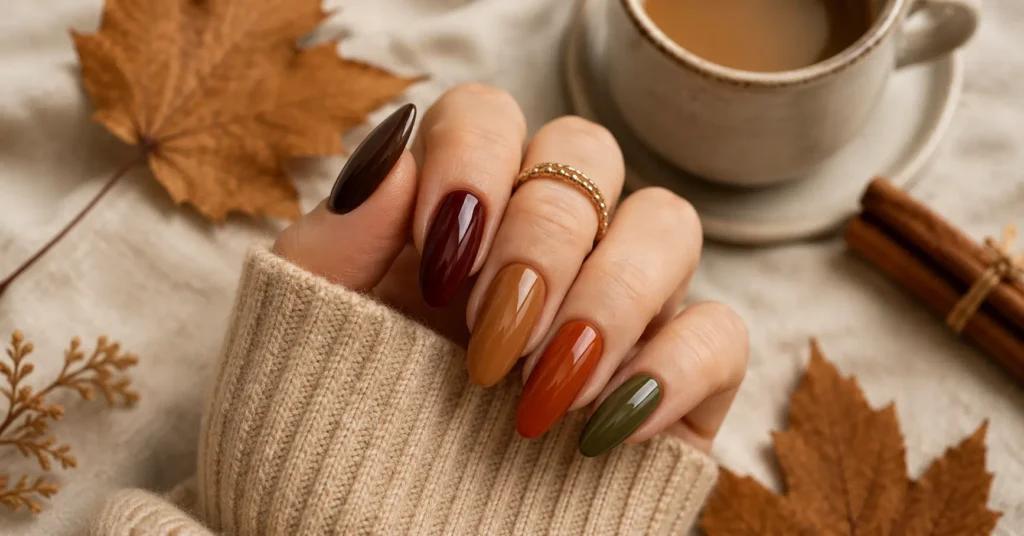
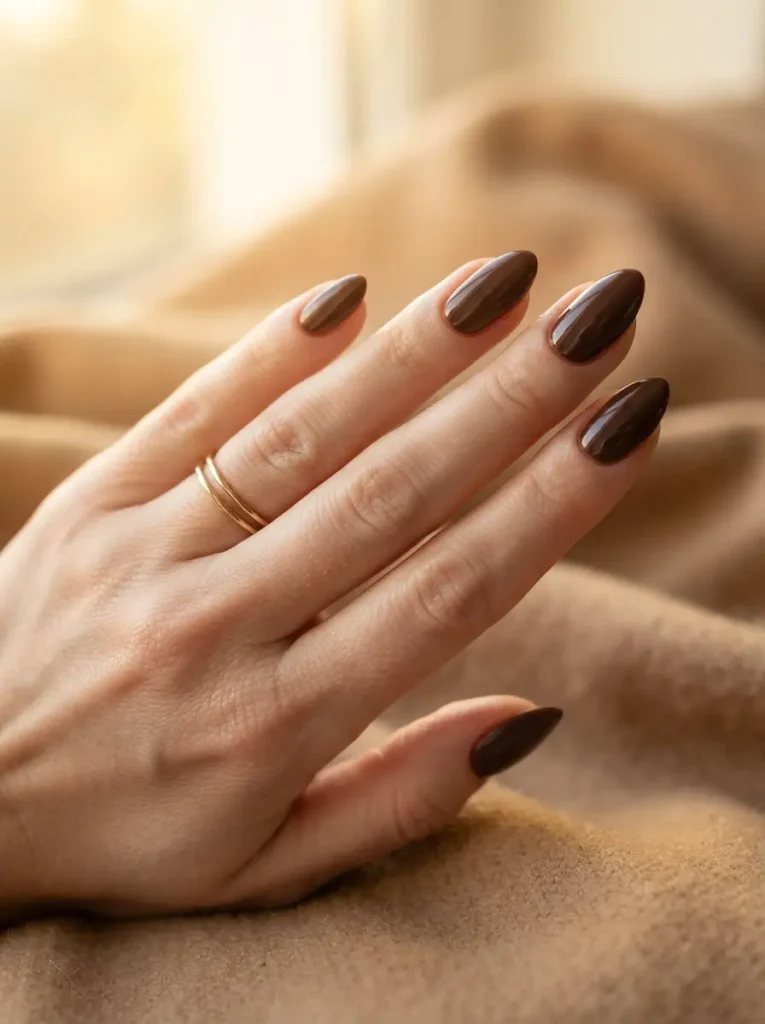
Browns and mochas. Deep latte, mocha and true chocolate are forecast as core shades for autumn and winter 2026, functioning as a softer alternative to black. Chocolate reads as quiet luxury next to gold jewellery; lighter caramel and latte browns work better as everyday shades and sit especially well on short oval or squoval nails.
Reds. Red isn’t going anywhere. Deep reds hold their place as a year-round classic, while The Zoe Report highlights tomato red — a warm, bright crimson – as a recurring summer favourite. In manicure terms, red functions as a neutral: it goes with almost everything.
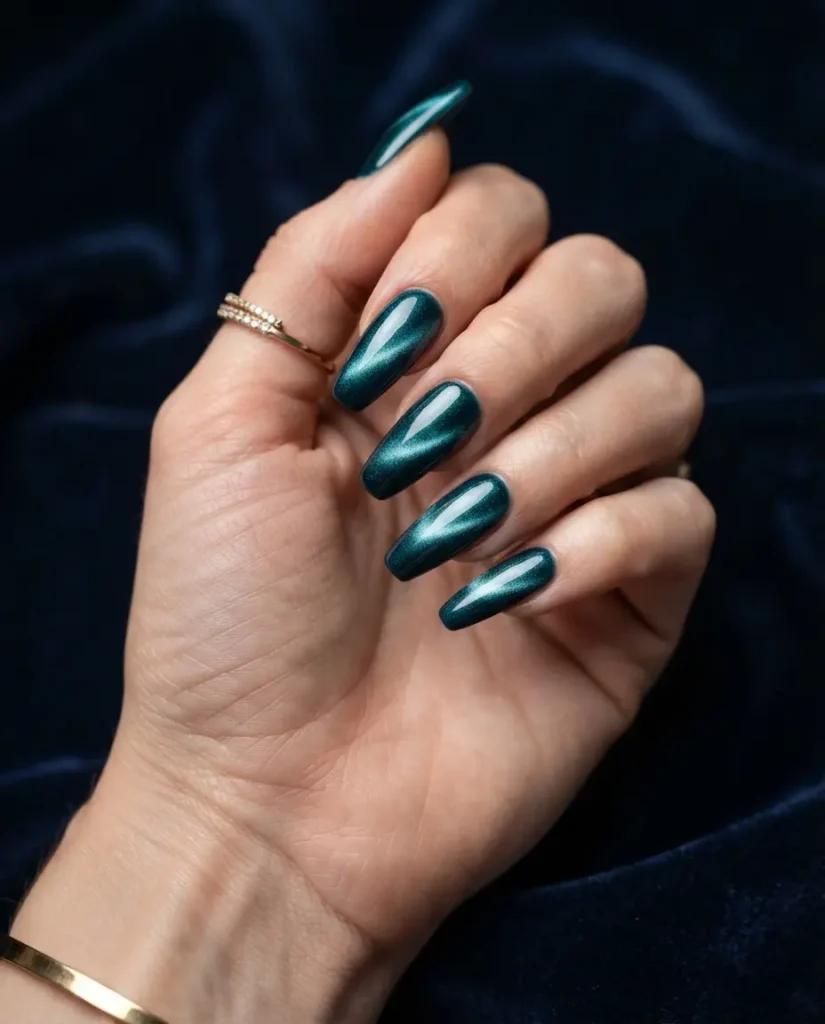
Gemstone tones. Bold teal, jade and plum are all in circulation. Real Simple’s 2026 forecast, drawing on celebrity manicurists including Jacqueline Pham of Color Street and ZOYA’s Rebecca Isa, names bold teal – particularly with a cat-eye effect – alongside barely-there mauves and burnished lilac as shades to expect this year.
Softened neutrals. Dusty rose, soft mauve and cool blush are being positioned as an update on the classic nude: more depth than a flat beige, still work-appropriate.
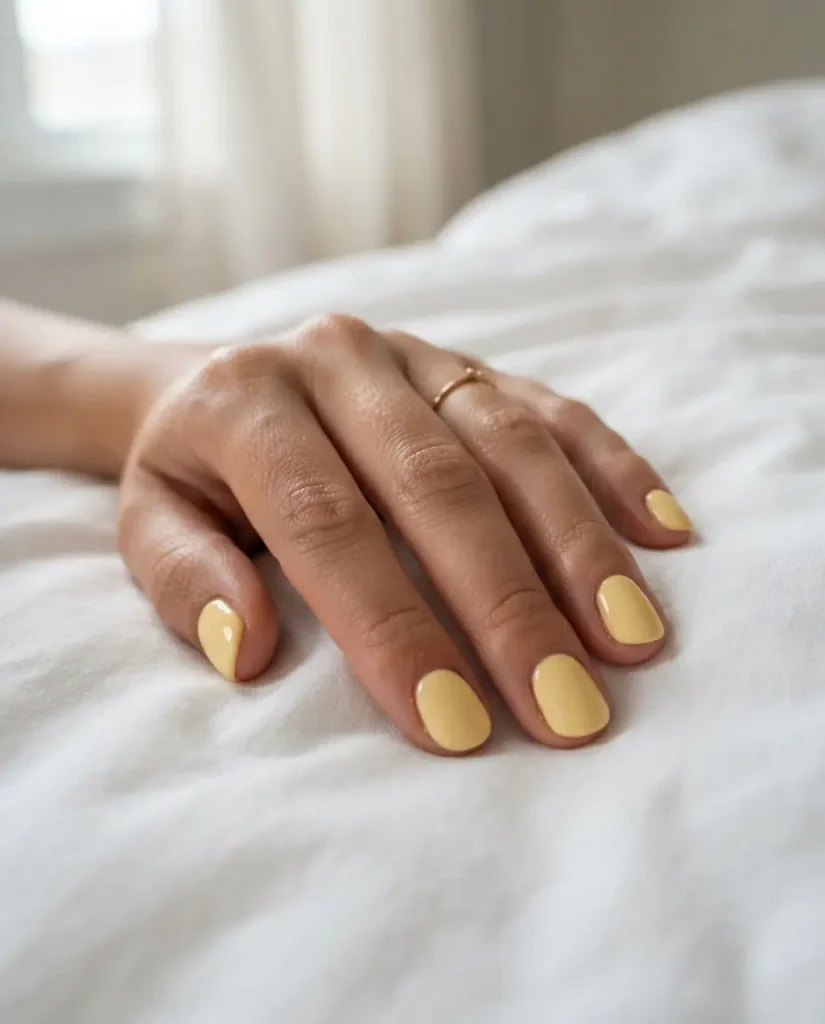
Butter yellow and pastels. Butter yellow has had unusual staying power for a seasonal shade – soft and fresh rather than bright, which is exactly why it survived past its first summer.
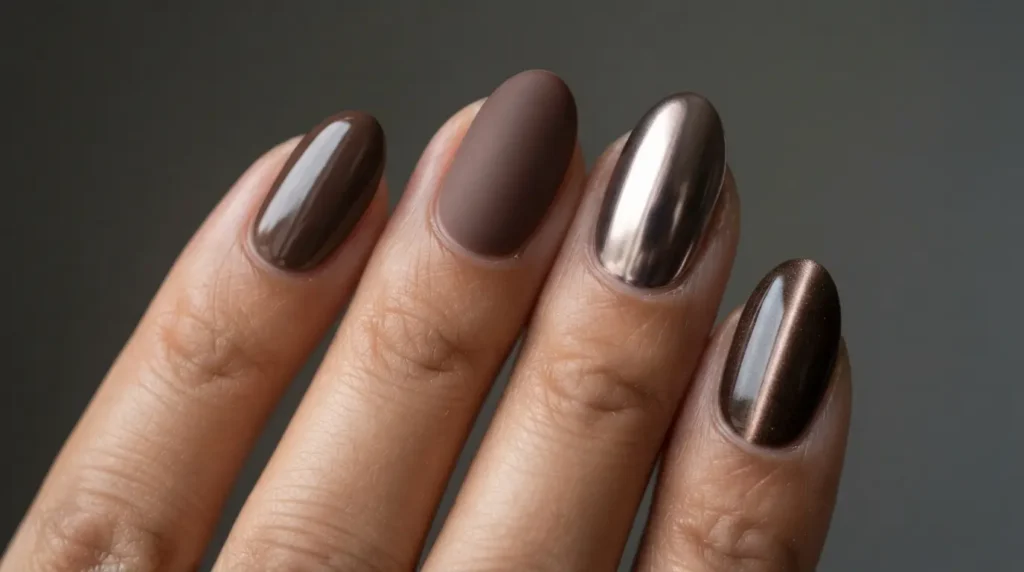
Finishes, which matter as much as colour. Chrome overlays, cat-eye shimmer, jelly translucency and glossy top coats are doing a lot of the work in 2026. The same mocha polish under a chrome topper and under a matte topper are two different manicures.
Picking a Colour for Your Skin Tone
Nail colour works best when it either matches or deliberately contrasts your undertone – the problem is only ever accidental mismatch.
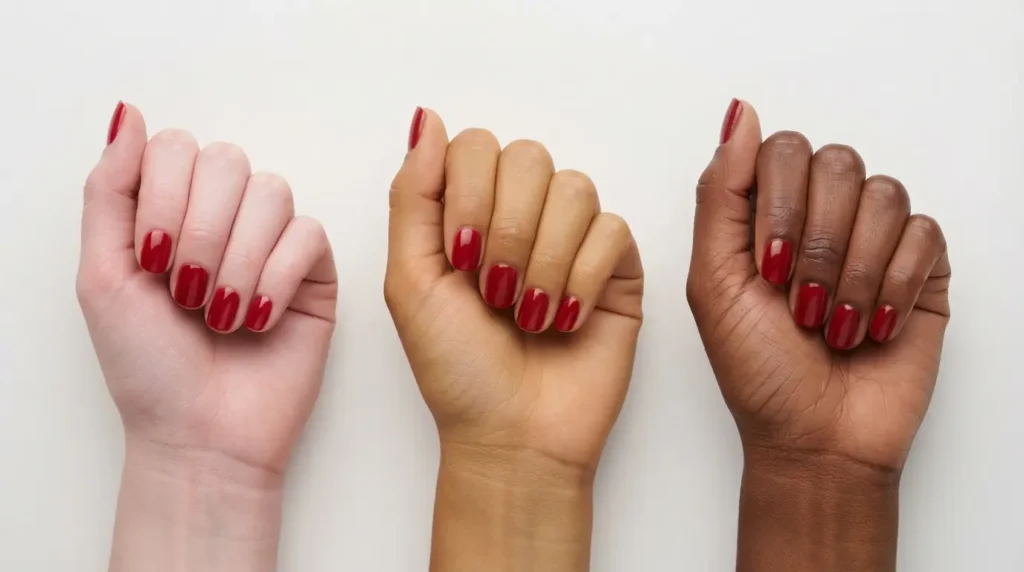
Find your undertone first with the vein test: look at the veins on the inside of your wrist in daylight. Blue or purple suggests a cool undertone. Green suggests warm. If you can’t tell, you’re likely neutral, which means almost everything works.
- Cool undertones sit well with blue-based reds, plum, true burgundy, cool mauve, lilac, and silver-leaning chromes.
- Warm undertones come alive with coral, tomato red, terracotta, caramel and latte browns, butter yellow, and gold chrome.
- Neutral undertones can wear both. Start with rose, soft berry, or classic red.
Depth matters too, independent of undertone. On very fair skin, extremely pale nudes can wash the hand out – a shade a step deeper than your skin usually reads better. On deep skin tones, saturated jewel shades and bright whites both have real impact, and pale milky shades create a striking contrast if that’s the effect you want.
None of this is a rule you have to obey. It’s a starting point for when you’re standing in front of a wall of three hundred bottles with four minutes to decide.
Six Colour-and-Shape Combinations That Work
This is where most nail set inspiration falls apart: it shows you a colour without telling you what shape and length it was photographed on. Here are six complete sets – shape, length, colour, and finish together – with the situation each one is actually for.
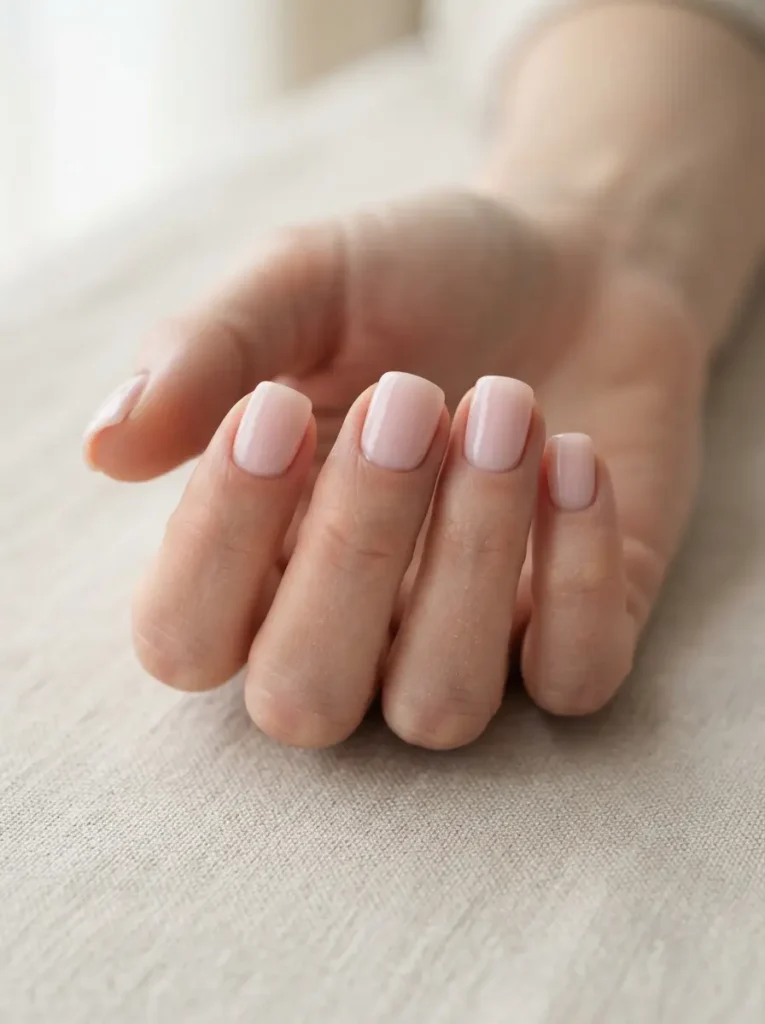
1. The everyday professional: short squoval, milky pink, high gloss. Nearly indestructible, grows out invisibly, and never once looks inappropriate in a meeting. This is the set to get if you’re nervous about your first full set.

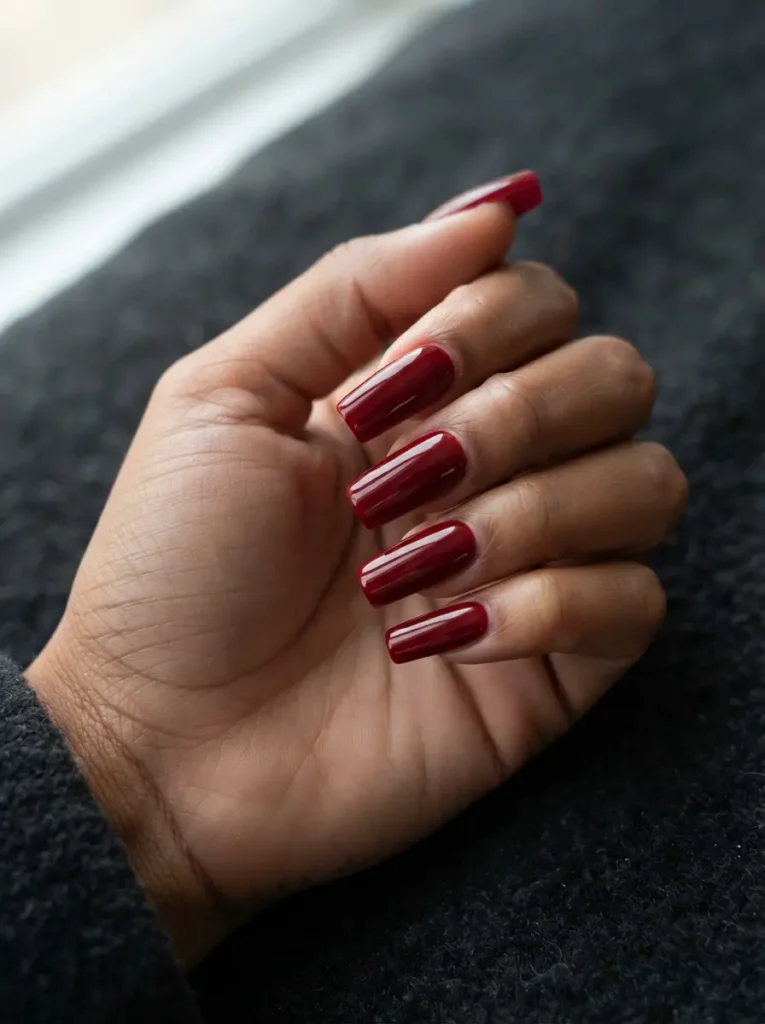
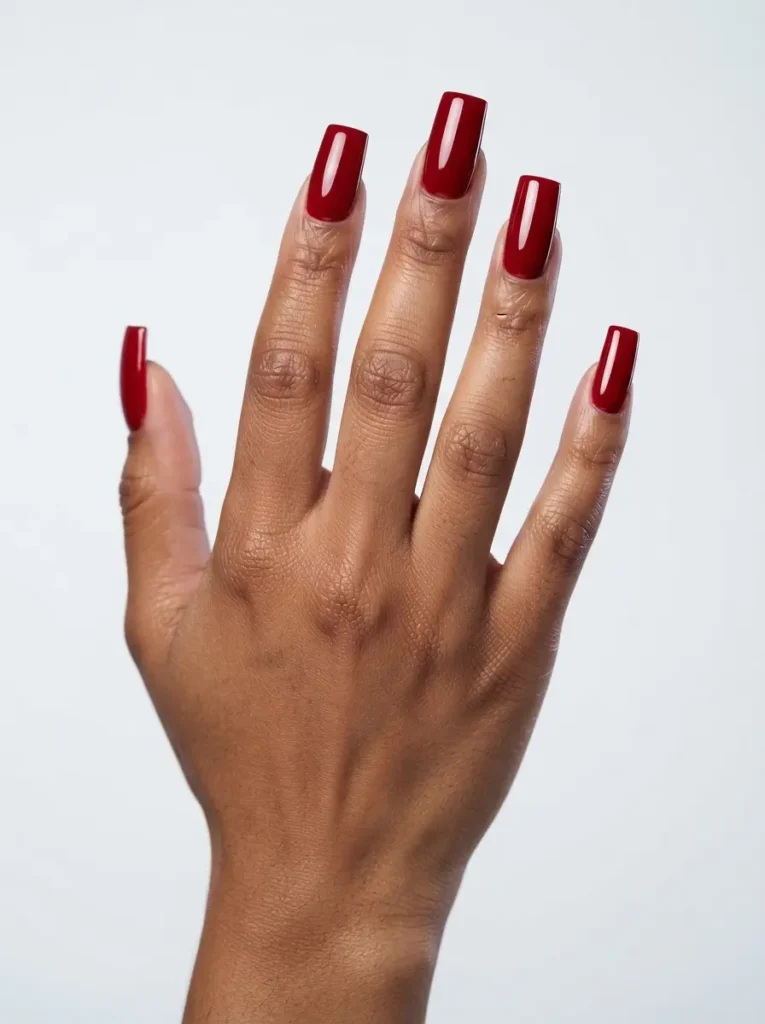
2. The baddie square Long square, one saturated colour, mirror gloss – deep red, black, or bold teal all work. This is the classic baddie nail set: the length and the sharp corners are the whole point, so don’t soften them. Budget for the fact that square tips at this length will snag, and keep a glass file in your bag.
3. The quiet luxury set Medium almond, chocolate or mocha brown, glossy or lightly chromed. Reads expensive rather than trendy, works with gold jewellery, and is forgiving as it grows out because the brown-to-nail-bed transition is subtle.
4. The event set Long coffin, gemstone teal or plum with a cat-eye or chrome finish. Built for photographs. It’s high-maintenance and worth it for a specific date rather than as a default.
5. The soft short set Short round or oval, butter yellow or dusty mauve, glossy. The most under-rated option on this list. Short nail sets have quietly become their own aesthetic rather than a compromise, and a soft shade on a round shape looks intentional in a way that a badly-chosen long set never does.
6. The elongating set Medium almond, sheer nude with a hidden French tip. The taper and the blended tip do two elongating jobs at once. This is the set for anyone who wants longer-looking fingers without longer-looking nails.
Every one of these can be shortened. Notice that four of the six are short or medium – that’s not an accident.
Short Nail Sets vs Long Nail Sets
Choose length based on your week, not your inspiration folder. Long sets photograph better; short sets live better.
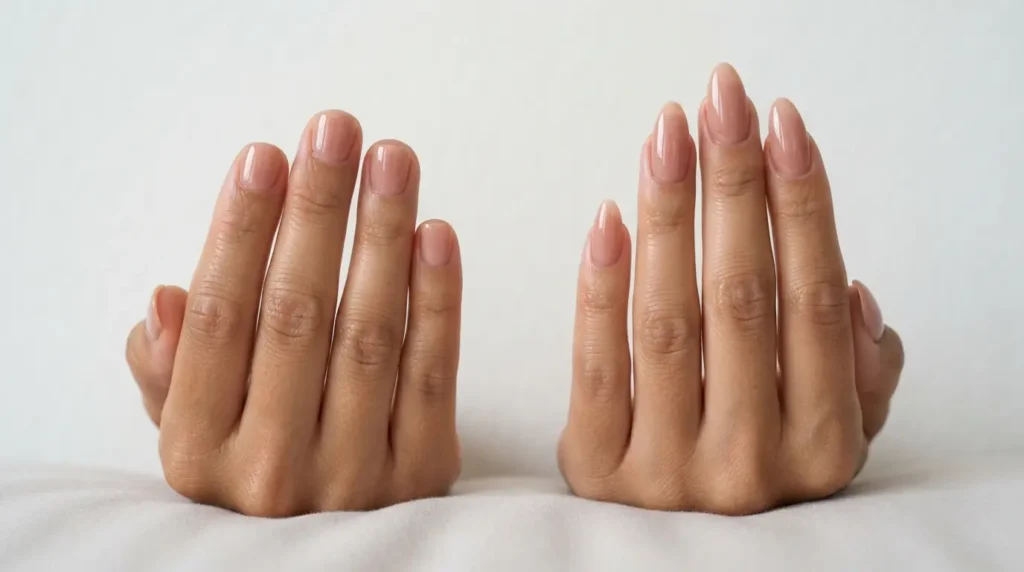
Long sets – roughly 5mm or more past the fingertip give you a canvas for detailed art, make coffin and stiletto shapes possible, and change the proportions of your hand. They also change how you type, unlock your phone, put in contact lenses, cook, handle a baby, and work out. Most people adapt within about three days. Some never do.
Short sets – up to a few millimetres past the fingertip – hold up to almost anything, cost less when art is involved, and are far less likely to snag and lift. The trade-off is a smaller canvas, and shapes like coffin and stiletto are simply off the table.
Here’s a test that works better than anything aesthetic. Think about the single most fiddly thing you do on a normal day – restringing a guitar, opening a laptop, changing a nappy, whatever it genuinely is. If you can’t picture doing that with 8mm nails, get a short set and put the money into the colour and finish instead.
If you want the long look without the long commitment, press-ons let you wear a long set for one weekend and hand your fingers back on Monday.
Acrylic, Gel, Dip or Press-On
The enhancement type decides your cost, your appointment length, and your removal process. All four can produce essentially the same colour and shape, so choose on practicalities.
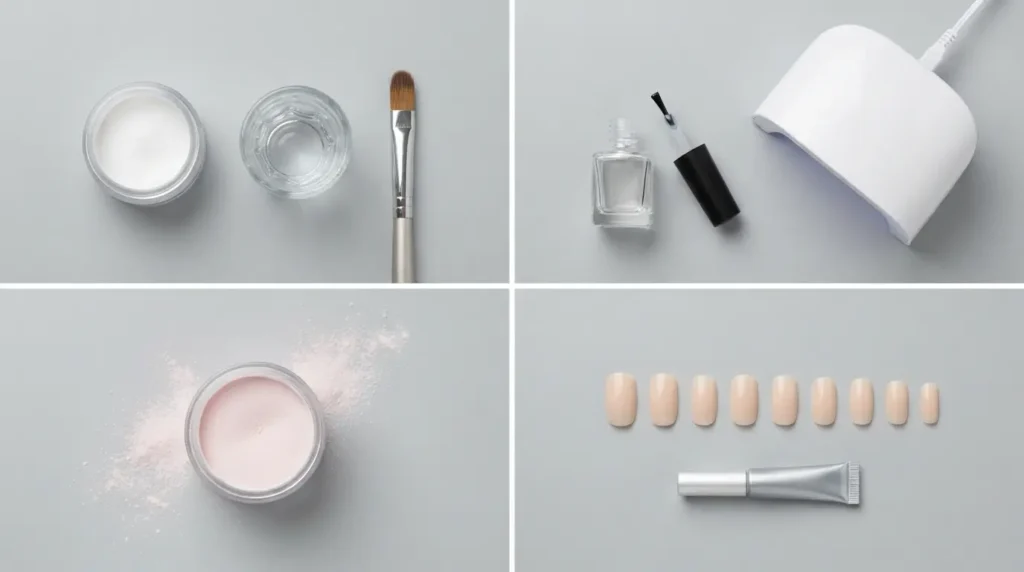
| Type | How it works | Typical wear | Best for |
|---|---|---|---|
| Acrylic | Liquid monomer + powder polymer sculpted and air-hardened | 2–3 weeks to a fill; 6–8 weeks with fills | Length and strength; heavy daily wear |
| Hard gel | Gel built into an extension, cured under lamp | 2–3 weeks to a fill | A glossier, slightly more flexible extension |
| Soft gel / gel polish | Colour coats cured under lamp over natural nail | 2–3 weeks | Natural-length sets; easier soak-off removal |
| Dip powder | Powder bonded with adhesive layers, no lamp needed | 2–4 weeks | Strength with less filing than acrylic |
| Press-on | Pre-made tips applied with glue or adhesive tabs | Days to about 2 weeks | Trying a shape or length before committing |
Two things worth knowing when you weigh these up. The American Academy of Dermatology suggests soak-off gel over acrylic where you have the choice, because gel is more flexible and therefore less likely to crack the natural nail underneath, and suggests choosing a salon that cures with an LED lamp rather than UV. And press-ons are no longer the poor relation – market forecasts cited by Glamnetic put the press-on category on a path from roughly $738 million in 2024 to about $1.075 billion by 2030, and product quality has followed the money.
What a Full Set Costs and How Long It Takes
A full set of acrylic nails generally costs between $30 and $60 in the US, though 2026 pricing breakdowns put the working range closer to $40–$80 with a national midpoint around $55–$65. Location, salon tier, technician experience, and length all move that number.
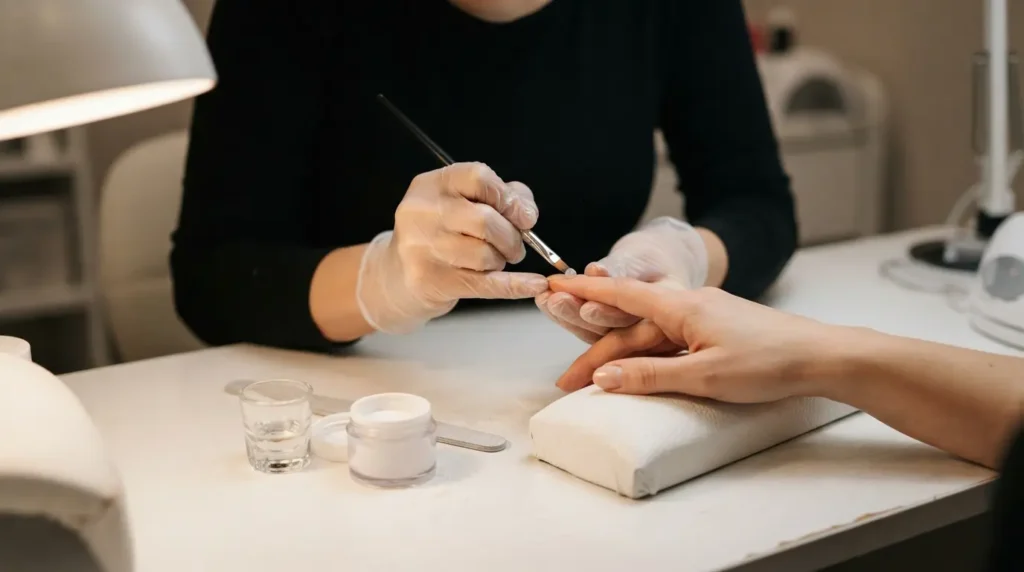
The base price is rarely the final price:
- Nail art commonly adds $15–$50 depending on complexity, and accent-nail designs often start around $5–$10 per nail.
- Fills run roughly $15–$50 and are needed every two to three weeks.
- Removal may be charged separately, particularly if you didn’t get the set done there.
On time: budget 60 to 90 minutes for a full acrylic set. Detailed art adds to that, sometimes substantially – if you want art on all ten nails, say so when you book rather than when you sit down, because your technician is scheduling for the time as much as the money.
The number that surprises people is the annual one. A set every three weeks with fills, plus occasional art and repairs, adds up to a meaningful yearly figure – one 2026 breakdown estimates a routine salon habit lands somewhere in the $1,500–$2,500 range across a year. Worth knowing before you decide whether this is a monthly ritual or an occasional treat.
Should Your Nails and Toes Match?
No – your nails and toes don’t need to match, and identical colours on both often looks dated rather than coordinated. What works is a deliberate relationship between the two.
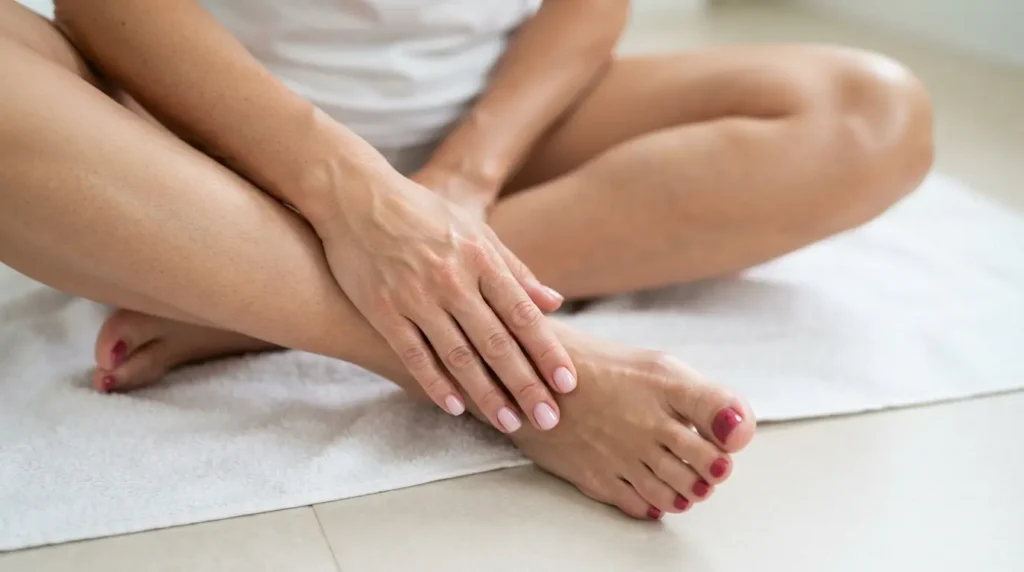
Three approaches that consistently look intentional:
- Same family, different depth. Milky pink on fingers, a deeper rose on toes. Related, not matching.
- Neutral hands, bold feet. This is the most practical combination by far, because your toes hold polish for weeks longer than your fingers do – feet don’t wash dishes. A bold pedicure lasts long enough to be worth the effort.
- Exact match for events only. For a wedding, a shoot, or a holiday where hands and feet appear in the same photograph, matching genuinely does look pulled together.
The one combination to avoid is accidental clash – a cool blue-red on fingers with a warm orange-red on toes. If they’re going to be different, make them clearly different.
How to Make a Nail Set Last
Lifting and chipping are usually caused by prep and aftercare, not by the product. These seven steps make the biggest difference:
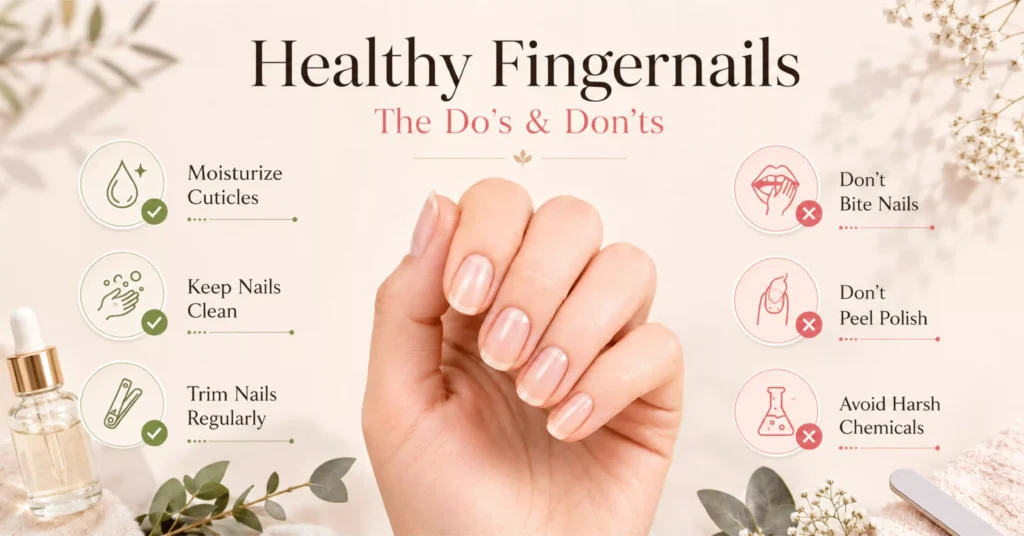
- Arrive with clean, oil-free nails. Skip hand cream on the day. Oil is the enemy of adhesion, and a set that lifts in week one almost always lifted because of what was on the nail in minute one.
- Ask for thin layers. Thick acrylic looks bulky and lifts sooner. A good technician builds up rather than piling on.
- Wear gloves for washing up and cleaning. Prolonged hot water and household chemicals get under the edges and break the seal.
- Oil your cuticles daily. Jojoba or almond oil keeps the surrounding skin flexible and, counterintuitively, keeps the enhancement from becoming brittle at the edge.
- Stop using your nails as tools. No opening cans, no scraping labels, no prising anything. This single habit causes more breakage than everything else combined.
- Book your fill before you need it – at the two-to-three week mark rather than when you spot a gap. Waiting lets moisture sit in the space between the acrylic and the nail, which is where problems start.
- Never pull a lifting nail off. You will take a layer of your natural nail with it. File it back, seal the edge, and book a repair.
Mistakes That Ruin a Good Set
- Choosing the shape from a photo of someone else’s hands. Finger length and nail-bed width change everything. Almond on a wide nail bed and almond on a narrow one are two different looks.
- Picking a colour under salon lighting only. Take the bottle to a window. Deep and muted shades in particular can shift dramatically in daylight.
- Booking art without booking the time. Ten decorated nails can double the appointment, and a rushed technician produces rushed work.
- Going long the week before a holiday or a big deadline. Adapting to long nails takes a few days. Don’t spend those days somewhere you can’t afford to be clumsy.
- Trimming cuticles. The cuticle is a seal against infection, and the Cleveland Clinic is explicit about leaving it alone rather than cutting it back.
- Removing the set yourself. Prying, peeling and filing at home is the fastest route to thin, tender nails that need months to recover.
Protecting Your Natural Nails Between Sets
Enhancements are not automatically damaging, but the process around them can be – and the damage is largely preventable.
The mechanism is straightforward. The American Academy of Dermatology explains that the surface of the natural nail has to be filed rough for acrylic to grip, and that filing thins and weakens the nail underneath. Add the drying effect of acetone at removal, the chemicals in the products, and the touch-ups every two to three weeks, and continuous wear leaves nails thinner and more brittle than they started.
The protective habits are simple, and dermatologists broadly agree on them:
- Take real breaks. Dermatologist Dr. Hadley King suggests treating acrylics as an occasional choice – worn for an event and then removed – rather than something you’re never without, and taking meaningful time off between sets.
- Keep fills on schedule. The Cleveland Clinic notes that regular fills stop moisture and bacteria collecting in the gap that opens as the nail grows.
- Leave the cuticle intact. It’s a barrier against infection, and once it’s cut it stops doing that job.
- Have removal done professionally, and follow it with cuticle oil and a nail strengthener rather than immediately going back into a new set.
- Choose the salon carefully. Sanitary tools, replaced files, no aggressive electric filing.
Two red flags worth acting on: nails that stay soft, tender or peeling weeks after removal, and any discolouration or separation between the nail plate and the bed. Both are worth a doctor’s opinion rather than another set over the top.