The first properly cold morning of the year always does the same thing to me. I dig out a sweater that smells faintly of last October, make something warm and cinnamon-adjacent, and then look down at my summery pink nails and think: no. These need to go.
If you’re in that exact mood, this list is for you. I’ve pulled together 11 burnt orange nail ideas that aren’t the same five designs you’ve already scrolled past a hundred times – no basic French tips, no orange-to-beige ombre on repeat. Each one comes with who it suits, how hard it is, and what you’ll need to pull it off.
Skip around if you like. The jelly one is my personal weakness, but the checkerboard gets the most compliments.
What Counts as Burnt Orange Nails?
Burnt orange is a deep, warm orange with red and brown in it – closer to terracotta, rust, and spiced pumpkin than to bright citrus. That earthiness is what makes it a fall staple: it echoes turning leaves, clay pots, and mulled cider instead of summer popsicles. Any design built on that shade family counts, whether the finish is glossy, matte, jelly-sheer, or chrome.
The 11 ideas below all start from that same rich base and take it somewhere different.
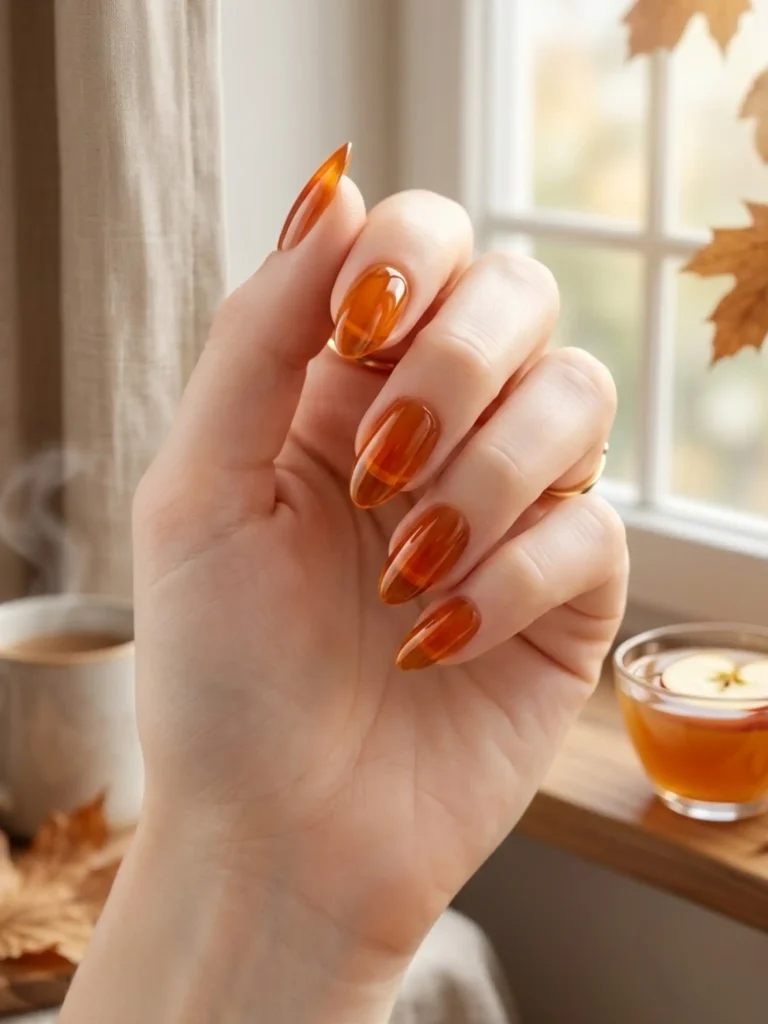
1. Apple Cider Jelly Nails
Apple cider jelly nails use a translucent amber-orange polish that light passes through, like a glass of warm cider held up to a window.
Best for: short to medium nails and anyone who wants color without heaviness.
Difficulty: easy.
Tools: a sheer jelly-style orange polish, a glossy top coat.
The whole look lives or dies on translucency. My first attempt, I got impatient and did two thick coats – it turned flat and opaque, and the magic was gone. Three whisper-thin layers are the way.
2. Glazed Pumpkin Chrome Nails
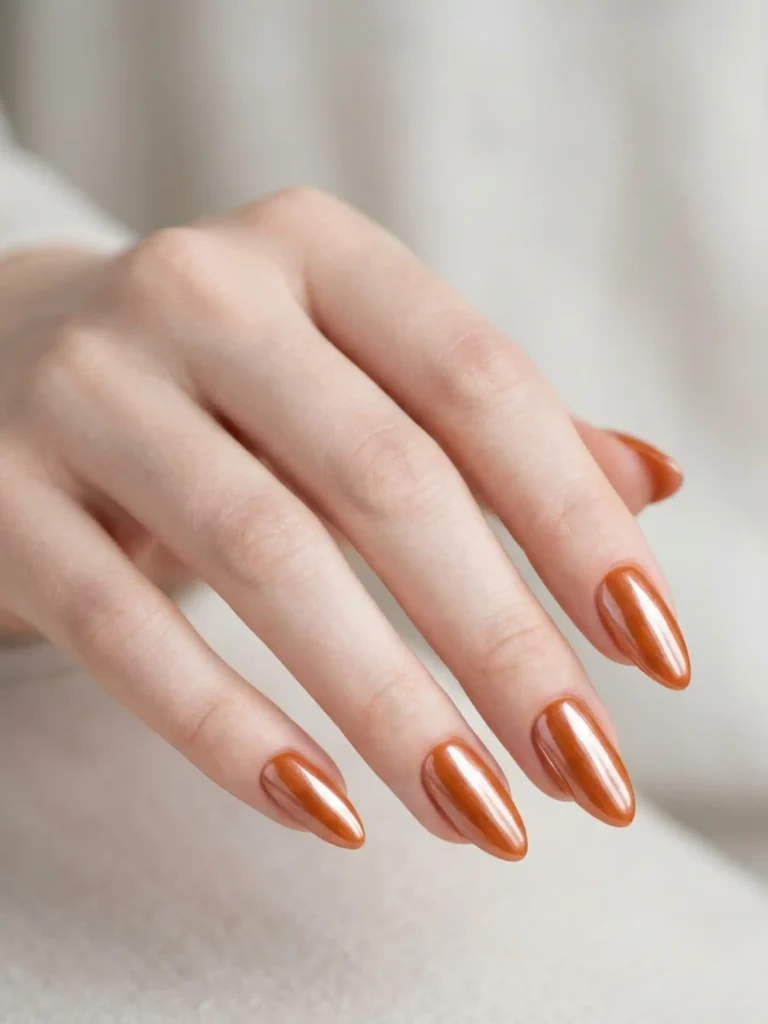
Glazed pumpkin chrome is a burnt orange base buffed with pearly chrome powder, giving that famous glazed-donut shimmer in a fall shade.
Best for: almond or oval nails and dressier autumn plans.
Difficulty: medium, mostly because chrome powder needs gel.
Tools: burnt orange gel polish, pearl chrome powder, a silicone applicator, an LED lamp, gel top coat.
Buff the powder onto a cured-but-not-top-coated layer – if the gel is still tacky, the chrome clumps into patches. Ask me how I know.
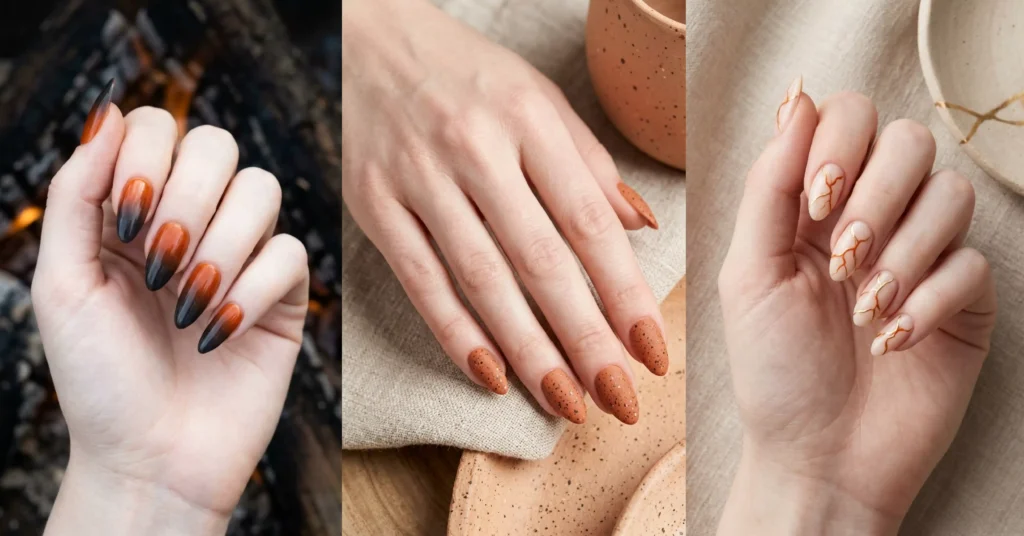
3. Terracotta Pottery Speckle Nails
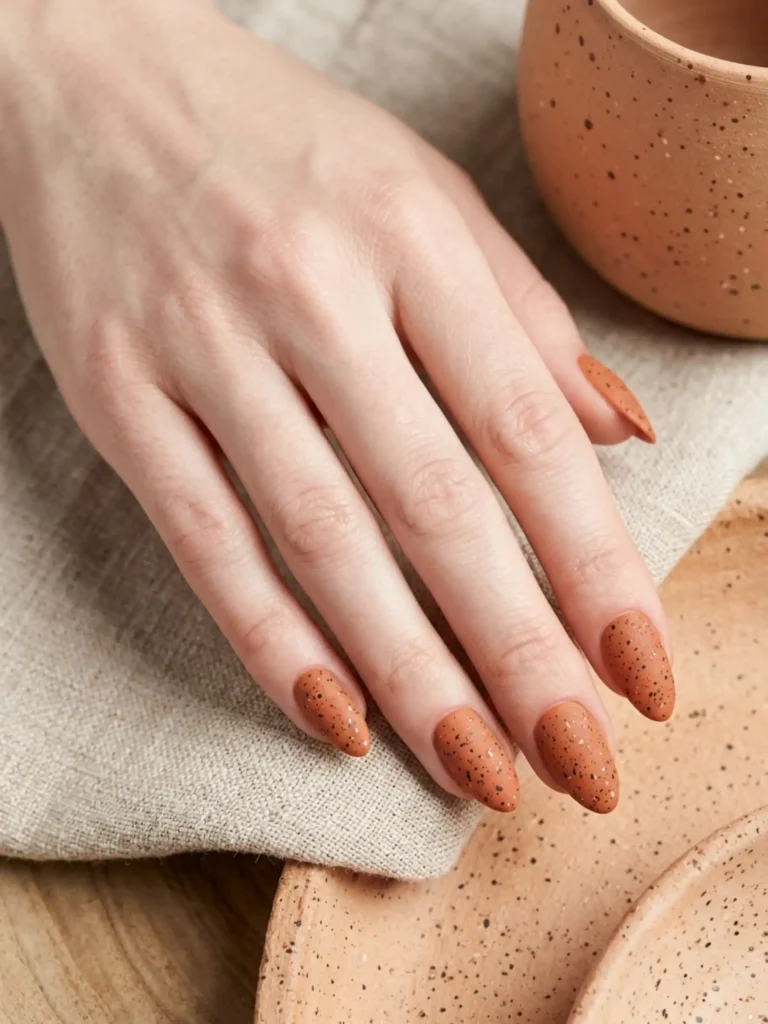
Terracotta pottery speckle pairs a matte clay-orange base with tiny brown and cream flecks, so each nail looks like a hand-thrown ceramic mug.
Best for: short square nails and everyday wear.
Difficulty: easy.
Tools: a terracotta polish, matte top coat, a fan brush or old toothbrush for splattering.
Load the brush lightly and test the splatter on paper first. My kitchen counter learned this lesson so yours doesn’t have to.
4. Rust Suede with a Gold Crescent Nails
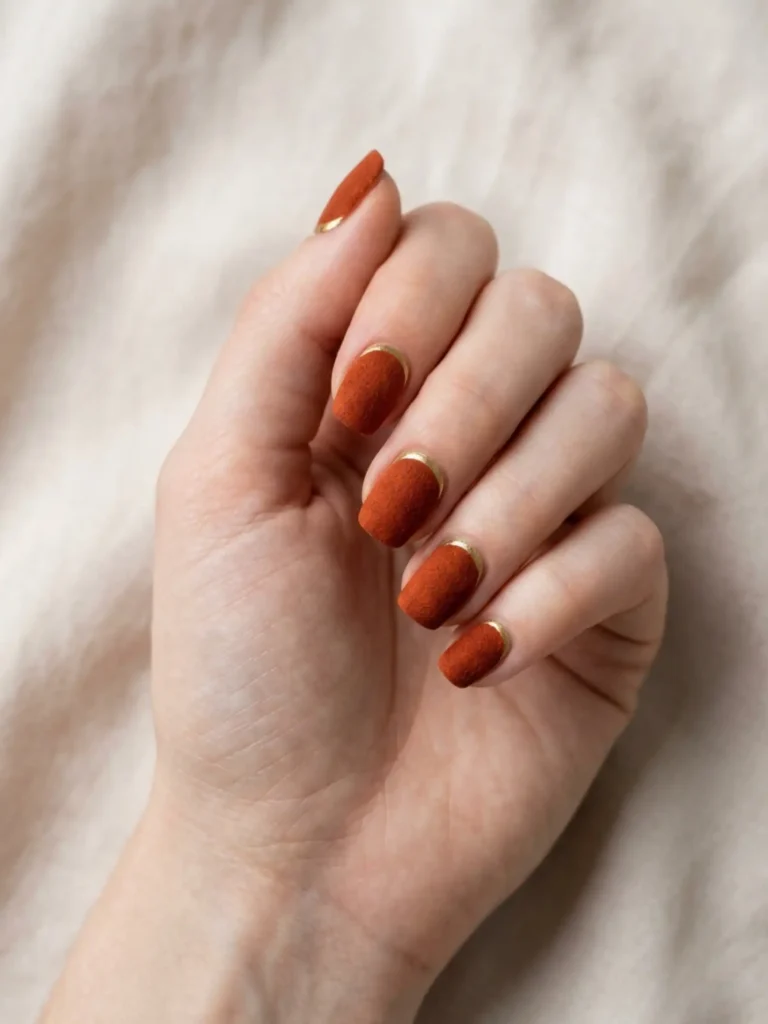
This design is a velvety, sugar-textured rust polish with one thin gold curve hugging the cuticle of each nail.
Best for: medium nails and people who find glitter too loud but plain matte too quiet.
Difficulty: medium.
Tools: rust polish, velvet or sugar-effect top coat, gold liner polish, a fine detail brush.
Paint the gold crescent before the velvet coat dries fully and it will bleed. Let everything set, then trace the curve slowly in one pass rather than dabbing.
5. Espresso Micro-French on Burnt Orange Nails
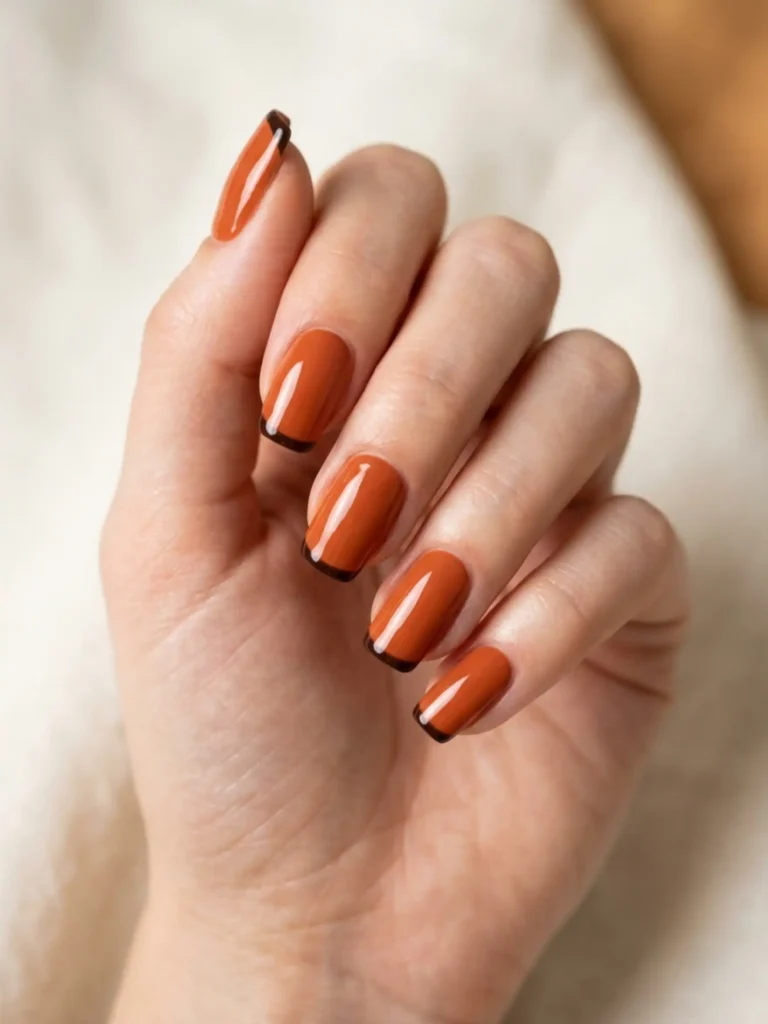
This one flips the usual formula: a full burnt orange base with an ultra-thin dark brown line at the very tip, instead of orange tips on nude.
Best for: short nails, where a skinny tip line reads sharp instead of cramped.
Difficulty: medium, purely a steady-hand thing.
Tools: burnt orange polish, a dark espresso-brown polish, a fine liner brush, glossy top coat.
Rest your painting elbow on the table and pull the brush across in one motion. The line should be thinner than you think – if it looks skinny in the bottle-brush moment, it’s probably right.
6. Smoked Ember Ombré Nails
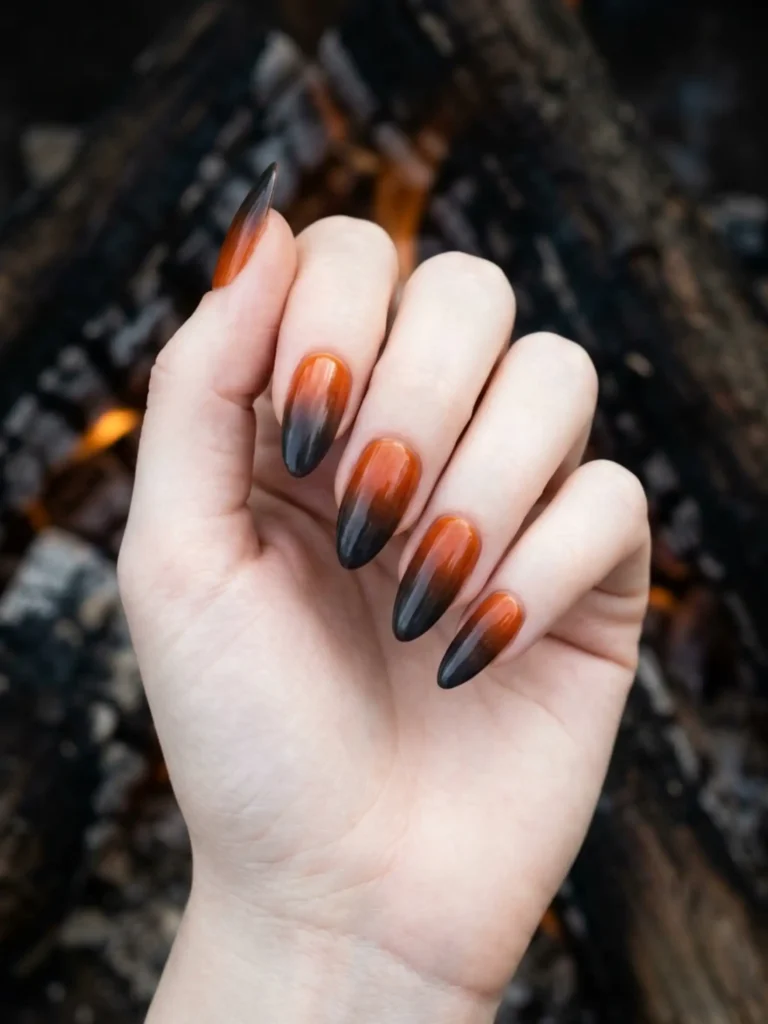
Smoked ember ombré fades burnt orange at the base into smoky charcoal at the tip, like the last glowing coal of a campfire.
Best for: longer almond or coffin nails, where the fade has room to breathe.
Difficulty: medium.
Tools: burnt orange and charcoal polishes, a makeup sponge, liquid latex or tape for cleanup, top coat.
Dab the sponge in light bouncing layers and rebuild the color gradually. One heavy press and the two shades turn into mud instead of smoke.
7. Maple Foil Patchwork Nails
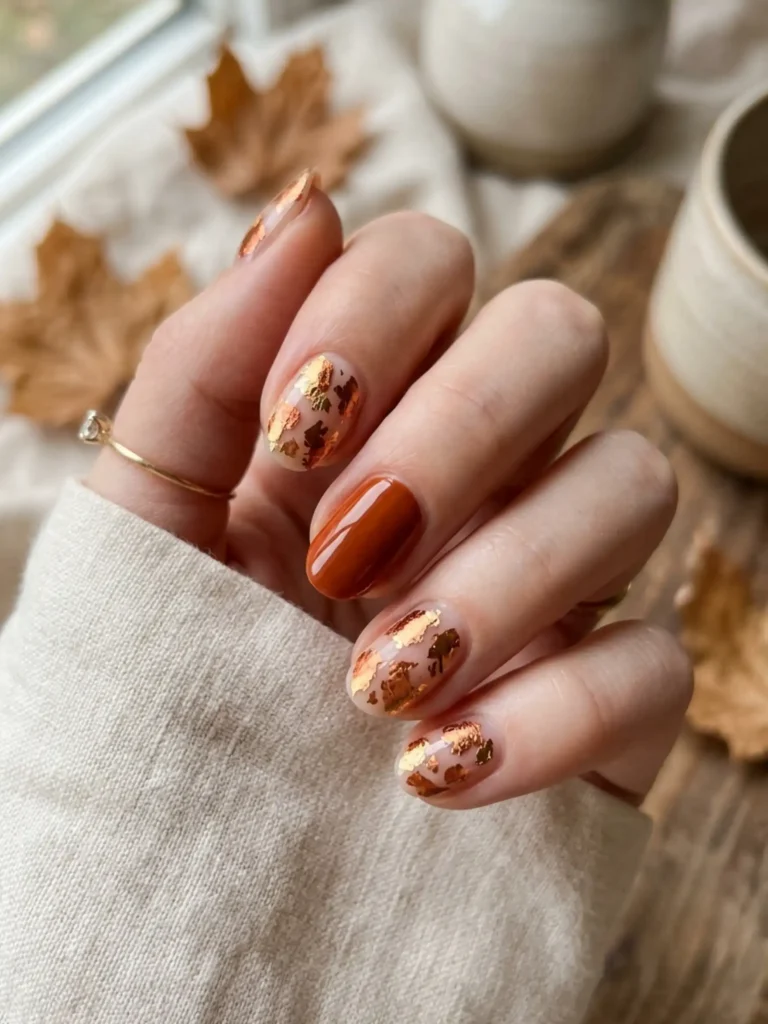
Maple foil patchwork scatters torn pieces of copper foil across a sheer nude base, with one solid burnt orange accent nail to anchor the set.
Best for: any length, and anyone who wants maximum effect for minimum skill.
Difficulty: easy.
Tools: sheer nude polish, burnt orange polish, copper transfer foil, foil glue or tacky top coat, tweezers.
Irregular is the goal here. The first time I tried to place the foil in neat little squares it looked like a craft fair accident — random torn patches photograph far better.
8. Cozy Flannel Plaid Accent Nails
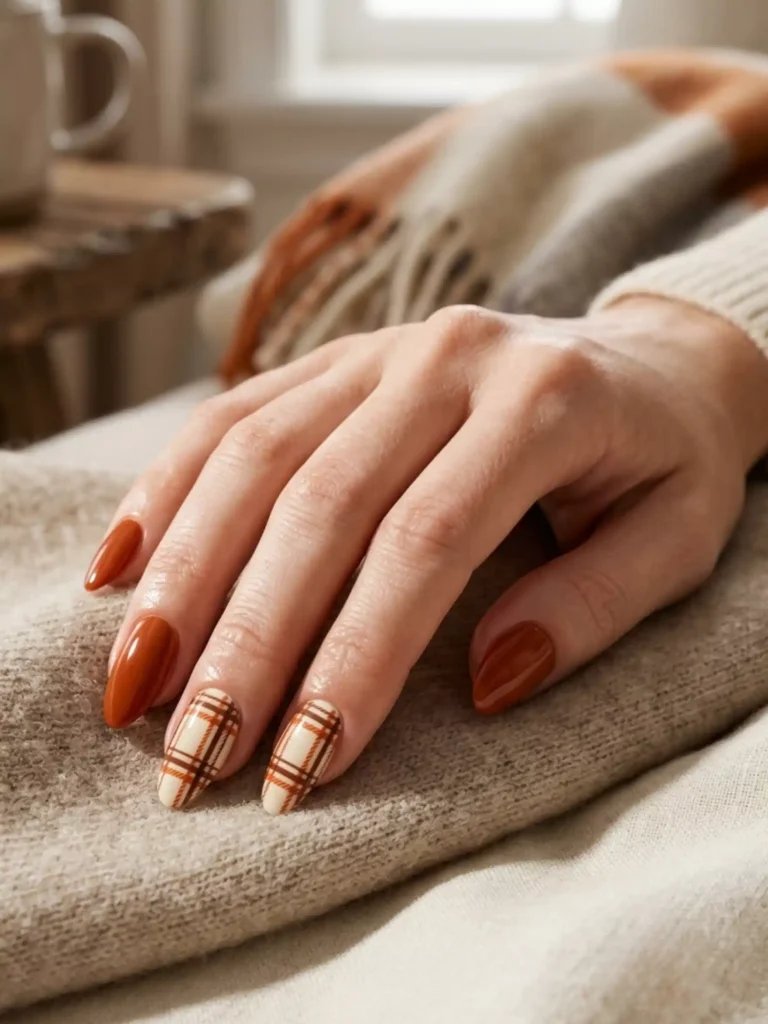
This look puts a fine-line plaid of burnt orange, cream, and chocolate on one or two accent nails, with the rest painted solid.
Best for: medium square nails and peak sweater-weather energy.
Difficulty: hard, if you want the lines crisp.
Tools: three polishes (burnt orange, cream, chocolate), a striping brush, top coat.
Do the widest stripes first, let them dry completely, then cross the thin lines over. Rushing the dry time smears the grid – plaid is a patience test disguised as nail art.
9. Retro Wavy Checkerboard Nails
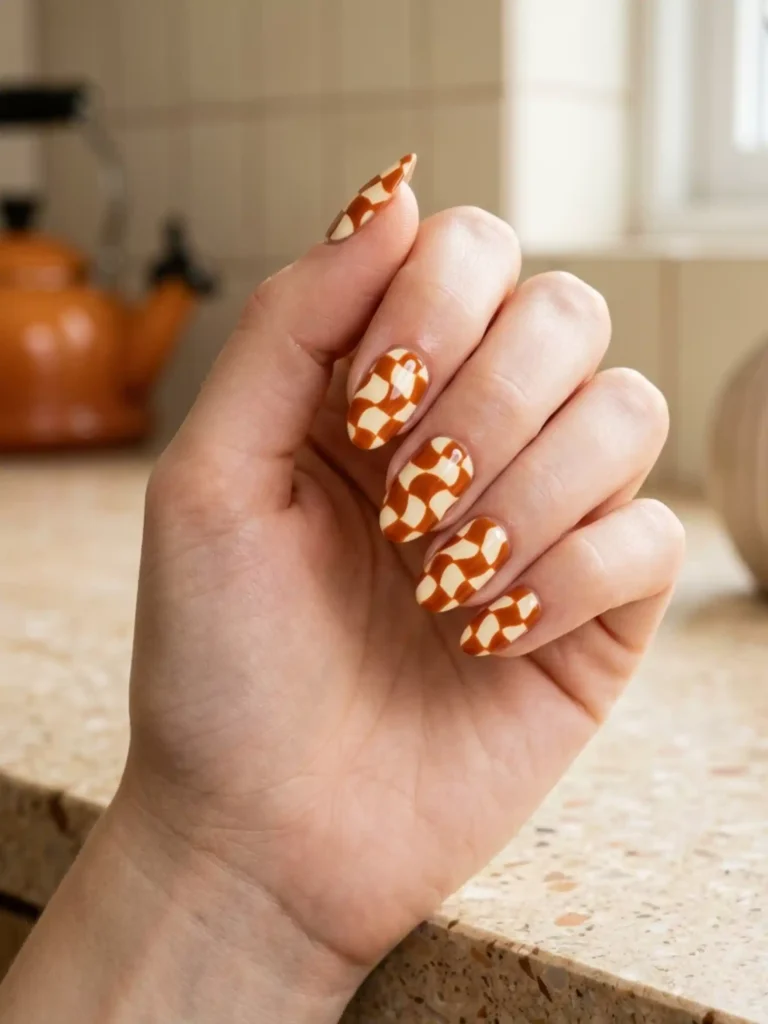
Retro wavy checkerboard is a hand-drawn check pattern in rust and cream with soft, wobbly edges, straight out of a 70s kitchen.
Best for: medium to long nails with a flatter surface.
Difficulty: medium – the wobble is the point, so perfection isn’t required.
Tools: rust and cream polishes, a small detail brush, top coat.
Embrace the wonk. The slightly uneven squares are what make it look intentionally retro rather than like a failed grid, which takes all the pressure off.
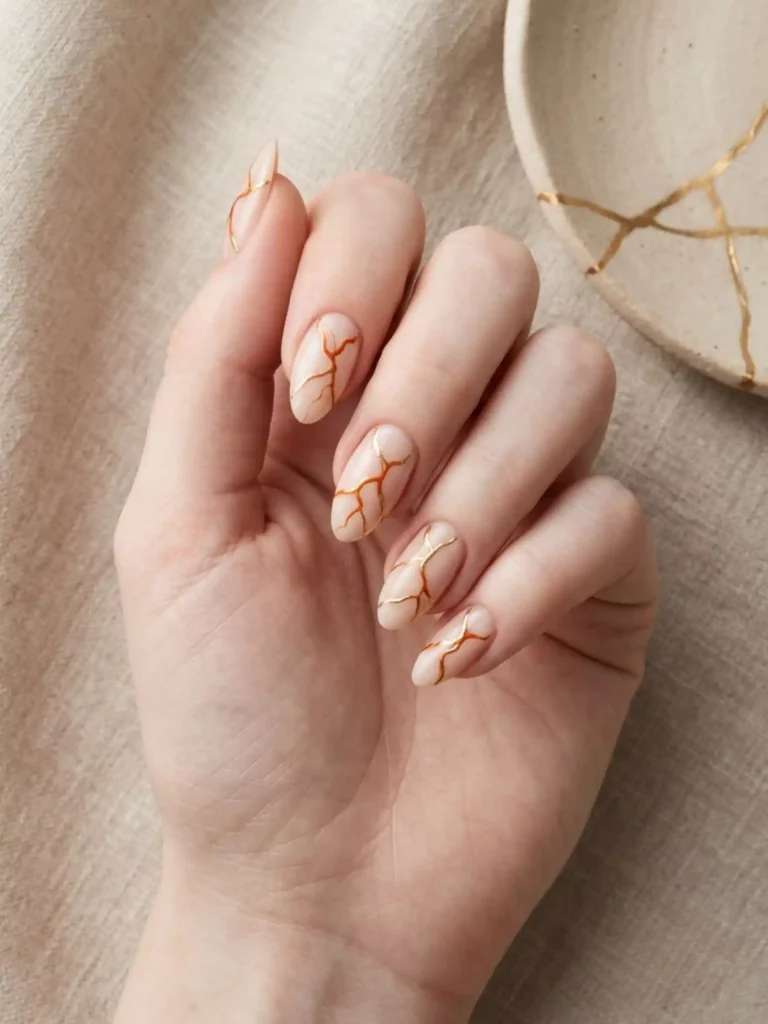
10. Kintsugi Crack Lines Nails
Kintsugi crack nails trace fine burnt orange fracture lines over a milky nude base, then edge them in gold – borrowing from the Japanese art of repairing pottery with gold seams.
Best for: almond nails and anyone who likes a design with a story behind it.
Difficulty: medium.
Tools: milky nude polish, burnt orange liner polish, gold liner polish, a fine detail brush.
Draw each crack as a branching lightning bolt, not a straight slash. Two or three cracks per nail is plenty – more starts to look like a shattered screen.
11. Embossed Leaf Veins Nails
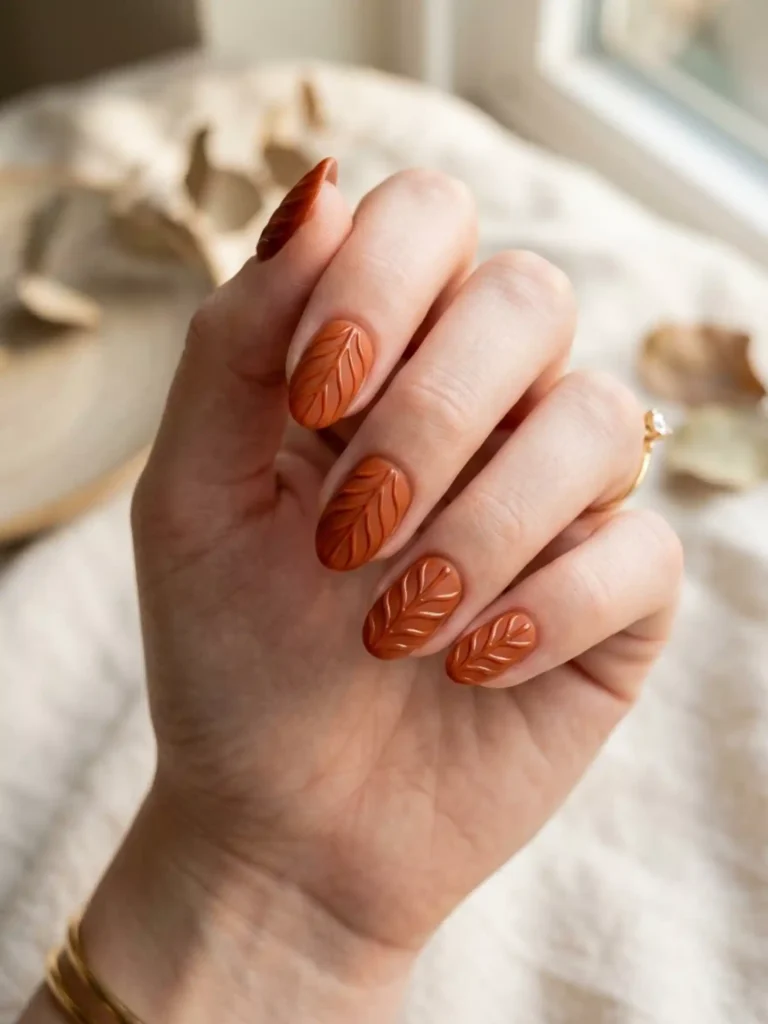
Embossed leaf veins are raised, tone-on-tone 3D gel lines drawn in a vein pattern over a burnt orange base, so the texture only reveals itself when light hits it.
Best for: medium nails and minimalists who still want something special up close.
Difficulty: hard, since it needs 3D gel and a lamp.
Tools: burnt orange gel polish, thick 3D or sculpting gel, a fine gel brush, an LED lamp, matte or glossy top coat.
Cure each vein line before drawing the next one, or gravity slowly flattens your work while you’re busy on the other nails. Slow and steady genuinely wins this one.
How to Make Burnt Orange Nails Last Through the Season
A little prep turns a one-week mani into a three-week one:
- Wash and dehydrate your nails first – swipe each one with alcohol or acetone so polish grips bare nail, not oil.
- Apply a base coat, no exceptions. Orange pigments are notorious stainers, and this is your insurance policy.
- Paint in thin coats, two or three, letting each dry properly. Thick coats peel in sheets.
- Cap the free edge by running the brush along the tip of the nail – tips are where chips start.
- Seal with a quality top coat, and refresh it every three or four days.
- Oil your cuticles nightly. Flexible nails chip less; it’s that simple.
How to Remove Burnt Orange Polish Without Staining
Deep orange pigment loves to leave a yellowish ghost behind, especially if you skipped base coat. Give remover time to work – hold a soaked cotton pad on the nail for ten seconds or so, then wipe in one firm swipe toward the tip instead of scrubbing back and forth, which grinds pigment into the nail plate.
For gel versions, soak off properly rather than picking or scraping; scraping thins the nail and makes it grab stains even harder next time. If a faint tint remains, a gentle buff and a few days of cuticle oil fades it. Whatever you do, resist the urge to peel.
Common Mistakes to Avoid with Burnt Orange Nails
- Skipping base coat. This is how you end up with pumpkin-tinted nails until November. One extra coat prevents it.
- Picking a too-bright orange. True burnt orange leans red-brown; a neon-adjacent shade reads summer, not fall. Hold the bottle against your skin in daylight before committing.
- Thick jelly coats. Jelly designs go opaque and lose their glow when you rush. Thin layers, always.
- Chrome powder on uncured gel. Tacky gel eats chrome powder and leaves bald patches. Cure first, then buff.
- Cramming trends onto one hand. Foil, plaid, cracks, and speckles all at once fights itself. Pick one idea per mani and let it be the whole point.