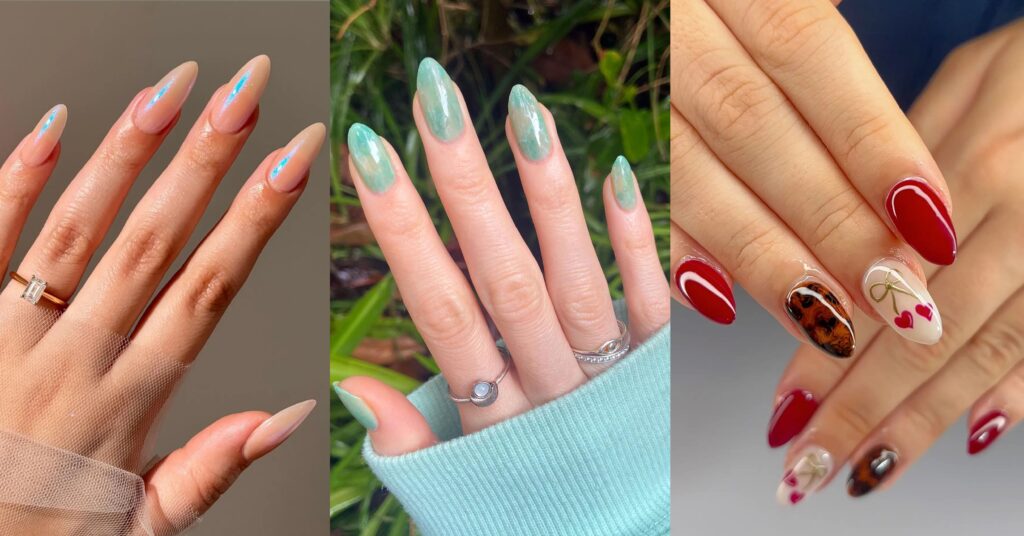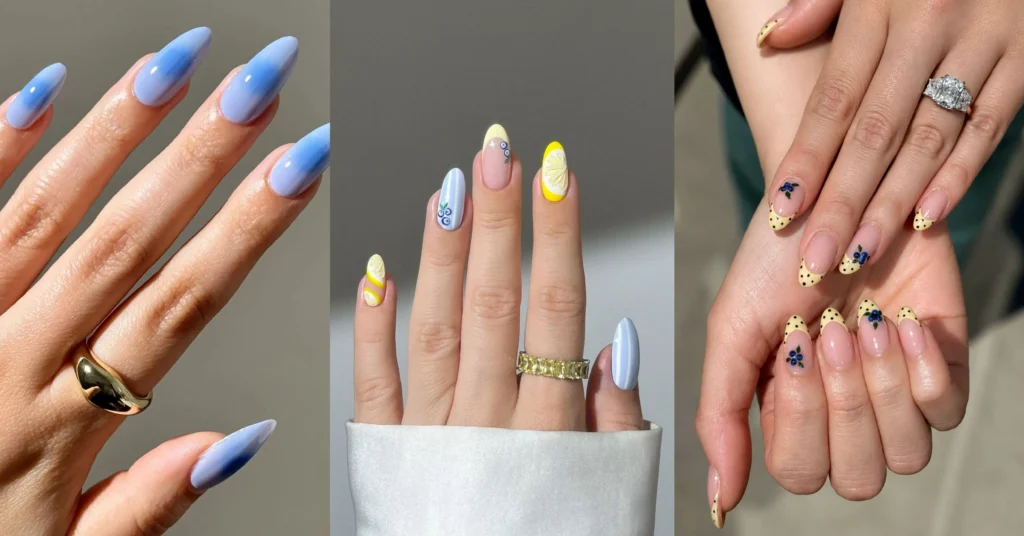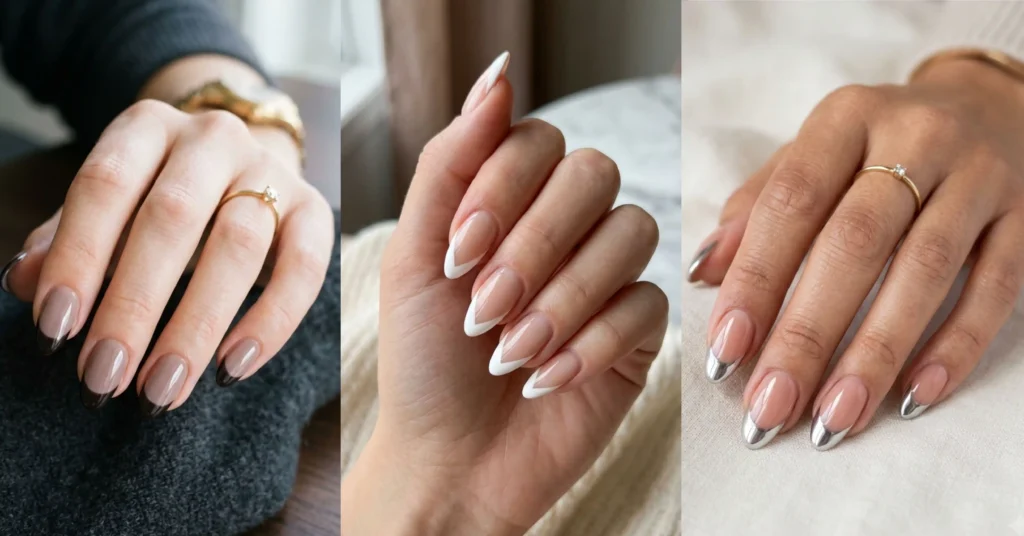
I got my first French manicure for a school dance about a decade ago, and it was the thick, chalk-white, squared-off kind that screamed early 2000s. When I asked for one again last year, my nail tech gave me a look and said, “You mean the new kind, right?” She was right to check. The French tip is back, but it’s grown up.
These days it’s thinner, softer, and honestly a lot cooler. Micro lines, chrome finishes, colour where the white used to be – the classic got a quiet glow-up while nobody was looking. Below are 10 modern French tip ideas I keep coming back to, each with what makes it feel current, the nail shape it flatters most, and how to actually get it (at the salon or at home).
Skip around to whatever catches your eye. There’s a version here for short nails, for minimalists, and for anyone who wants a little more.
What Counts as a Modern French Tip?
A modern French tip keeps the basic idea of the classic – a contrasting tip over a bare or sheer base – but updates the proportions and finish rather than the concept. Instead of a thick white band on a long square nail, the modern take leans thin, tonal, or unexpected.
The shift is mostly about restraint. Think a barely-there line instead of a bold one, a beige tip instead of stark white, or a mirror-chrome edge instead of matte polish. The shape usually changes too – almond and short natural nails have replaced the long squares of the old-school French. Once you see the pattern, every idea below is just a different lever on that same clean, understated look.
1. Micro French Tips
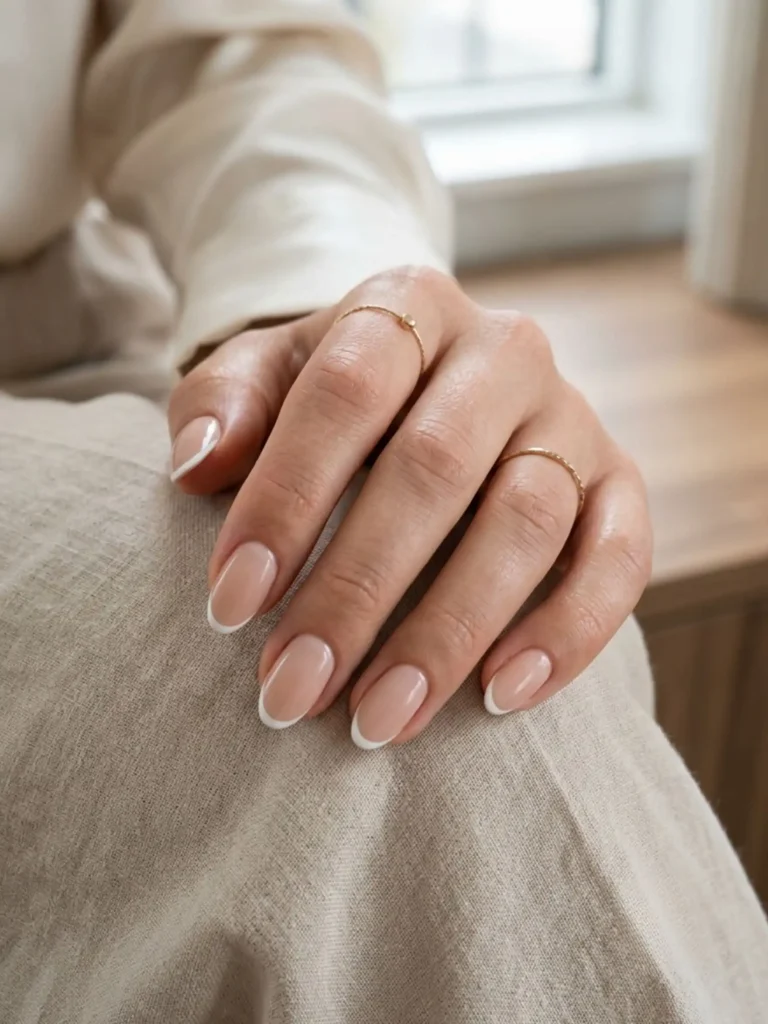
Micro French tips are ultra-thin lines painted right along the free edge, so the tip reads as a whisper instead of a stripe.
Best for: short and natural nails, and anyone who wants low-key polish.
Difficulty: medium – the thin line is less forgiving.
Tools: a fine-liner brush, a sheer nude or milky base, a crisp white or cream polish.
This is the single biggest reason old French tips look dated and new ones don’t. Keeping the line skinny elongates a short nail instead of chopping it off visually. Rest your brush hand on a table so it doesn’t wobble – a shaky micro line shows more than a shaky thick one.
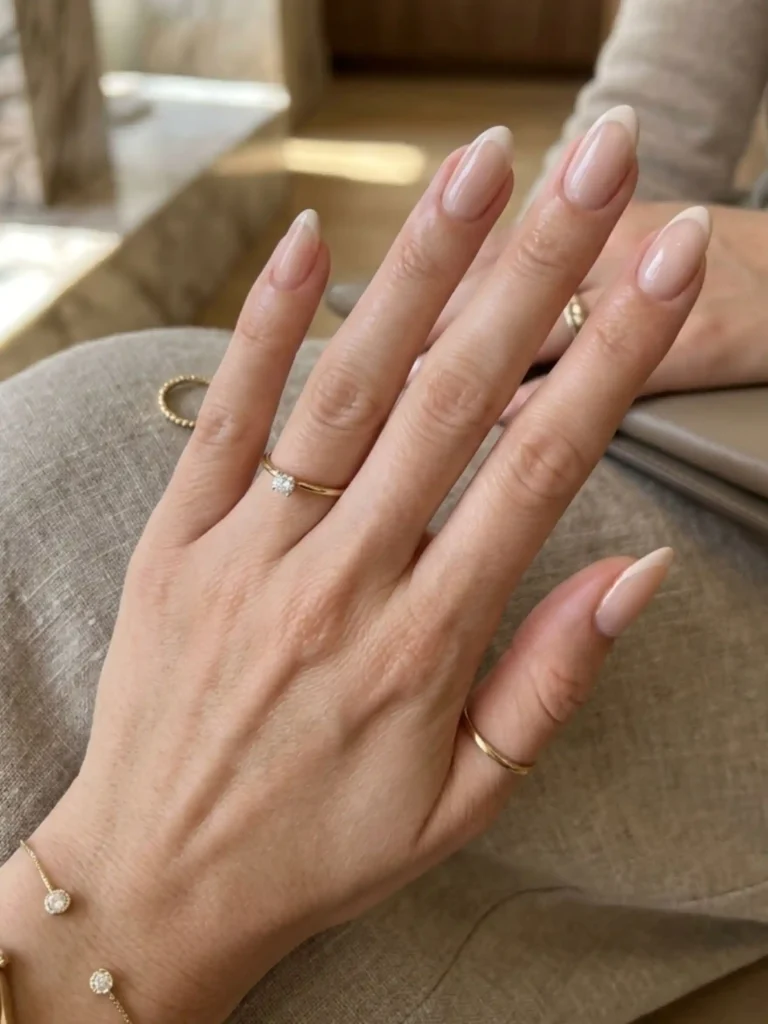
2. Tonal “Quiet Luxury” French
A tonal French uses a tip just a shade or two deeper than the base, so the contrast is soft and expensive-looking rather than sharp.
Best for: work, weddings, and anyone chasing the understated look.
Difficulty: easy.
Tools: a creamy beige base, a slightly darker beige or taupe tip, a glossy top coat.
Nude-on-nude is the whole trick here. Because the two shades are so close, small imperfections in your line basically disappear, which makes this one of the most forgiving modern styles. It pairs beautifully with gold jewellery and reads as effortless in a way a stark white tip never quite does.
3. Chrome and Glazed Tips
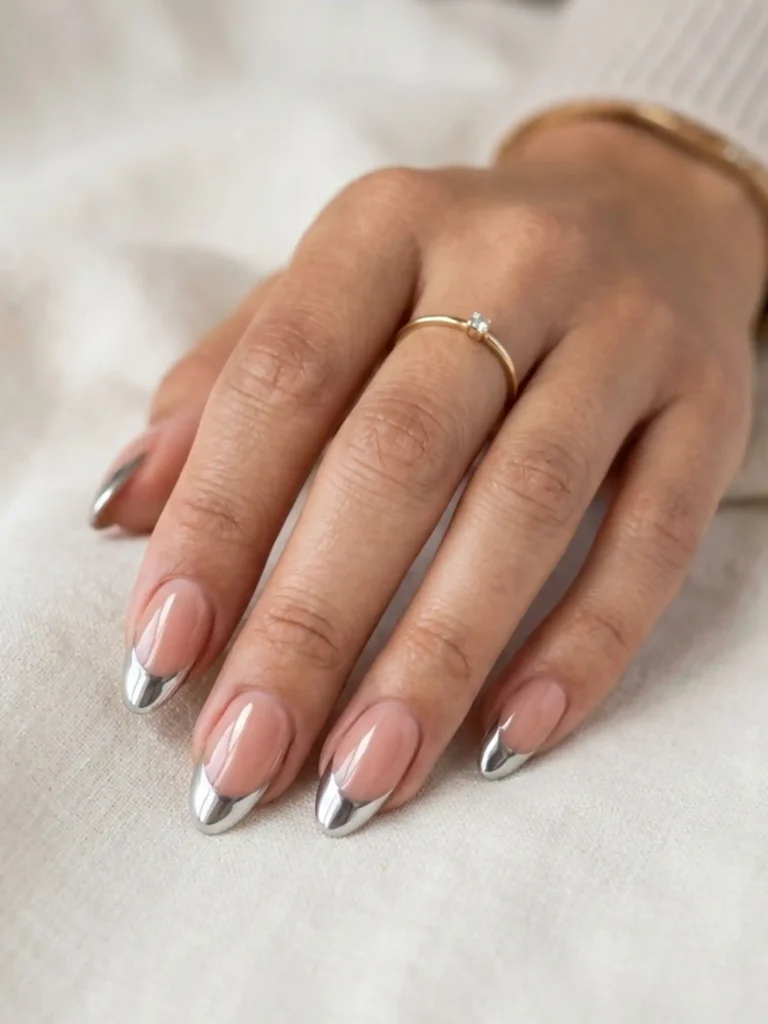
Chrome French tips swap flat polish for a reflective mirror or pearl finish on the tip, catching light with every hand movement.
Best for: nights out, holidays, and photos.
Difficulty: medium.
Tools: chrome or aurora powder, a no-wipe gel top coat, a soft eyeshadow-style applicator.
Chrome needs a fully cured, non-wipe top coat underneath or the powder won’t grab. A pearly “glazed” version over a milky base is softer and more everyday than full silver mirror, if hard chrome feels like too much. Fair warning: chrome shows wear faster, so a fresh top coat every few days keeps the shine alive.
4. Reverse French Tips
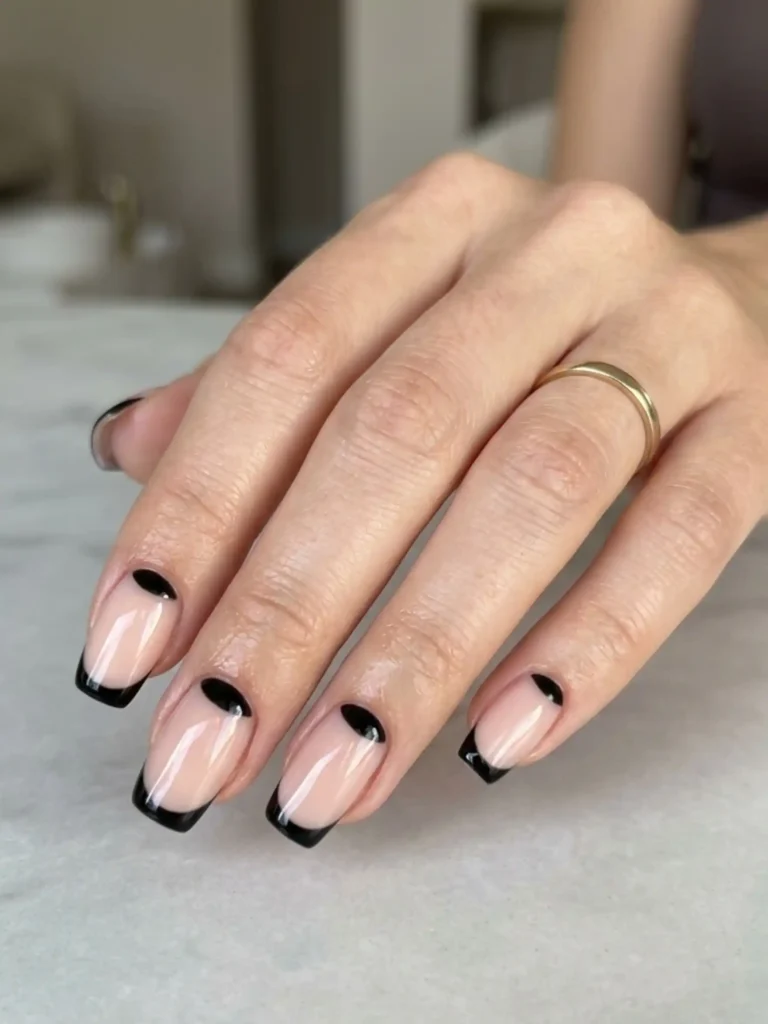
A reverse French traces a thin line around the cuticle instead of the tip, flipping the classic upside down.
Best for: minimalists who want something that still feels different.
Difficulty: medium.
Tools: a thin liner brush, a sheer base, a contrasting or metallic polish.
This one surprises people because the eye expects the colour at the top. It’s actually one of the easier “designer” looks to freehand since a slightly imperfect cuticle line hides in the curve of the nail. Keep the line delicate – thick versions start to look like a half-moon rather than a reverse tip.
5. V-Shape French Tips
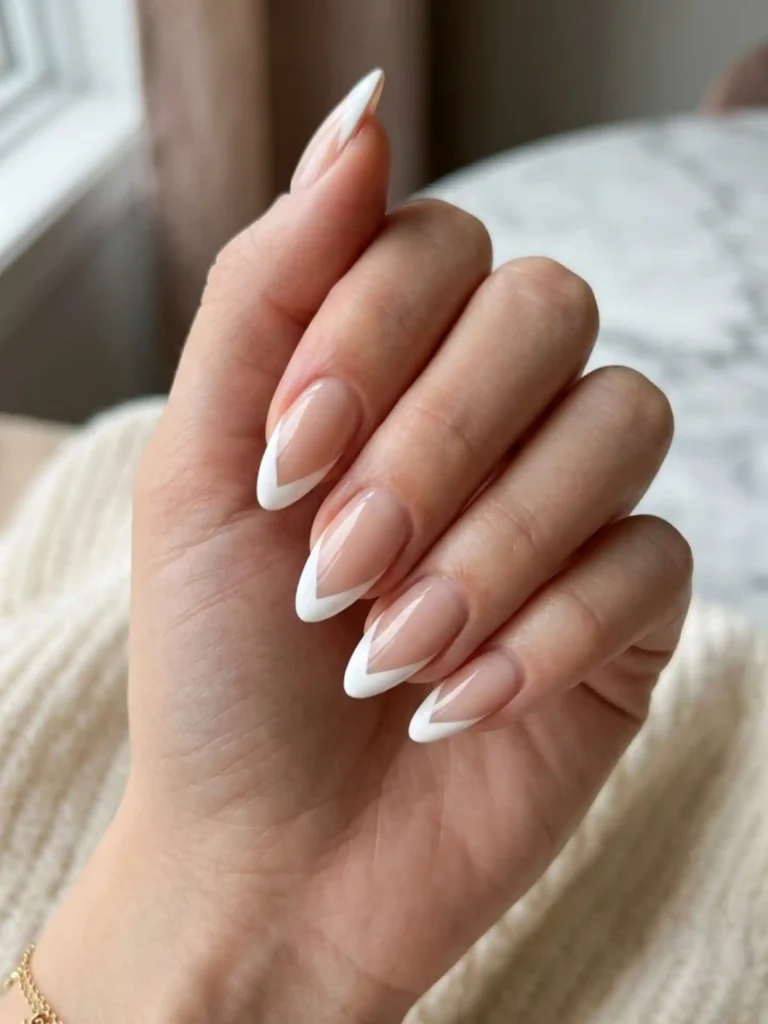
V-shape (or V-tip) French nails replace the usual curved smile line with a crisp angular “V” pointing toward the centre of the nail.
Best for: almond and square nails that you want to look longer.
Difficulty: hard – the clean angle takes patience.
Tools: thin nail art tape, a steady liner brush, a base and tip colour.
The angle is what makes short nails read as elongated and a little fashion-forward. Nail art tape is your best friend here: lay two strips into a V, paint above them, then peel while the polish is still wet. Doing it fully freehand is possible but genuinely tricky.
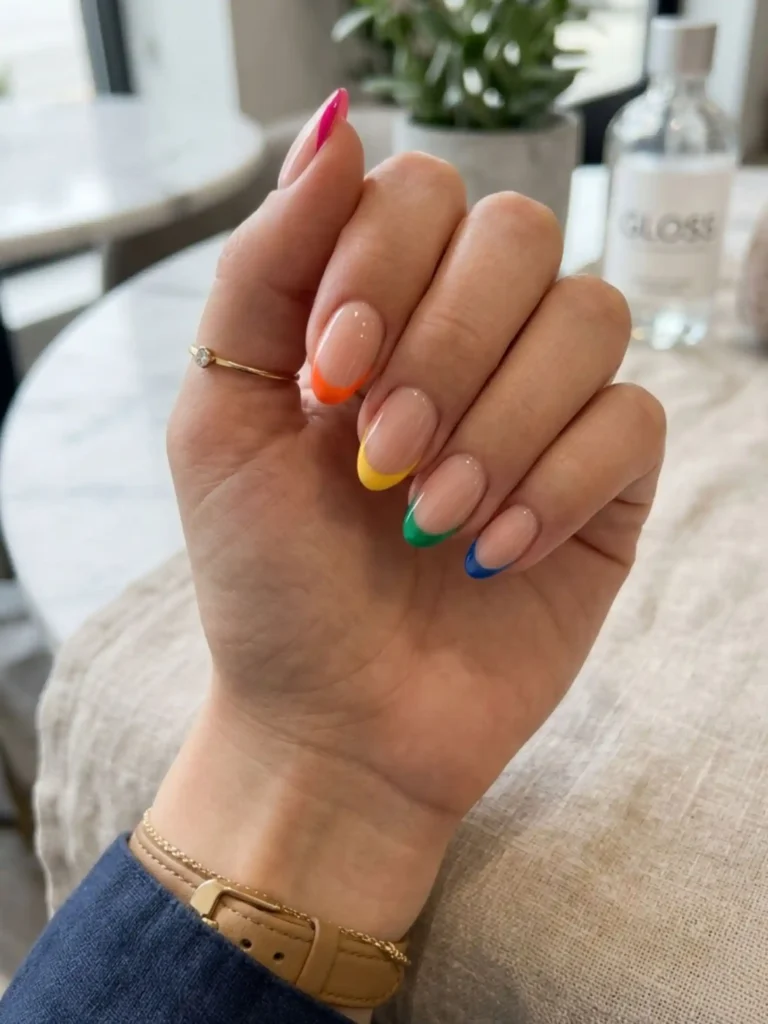
6. Colored Micro-French
A colored micro-French keeps the thin modern line but trades white for a soft or bright shade – butter yellow, powder blue, cherry red.
Best for: adding personality without a full colour mani.
Difficulty: medium.
Tools: a sheer base, a pigmented coloured polish, a fine brush.
This is the easiest way to make a French feel current and seasonal at once. Pastels lean spring, deep reds lean festive, powder blue is having a real moment. Because the colour only touches the tip, a bold shade you’d never wear full-nail suddenly becomes wearable.
7. Double-Line French
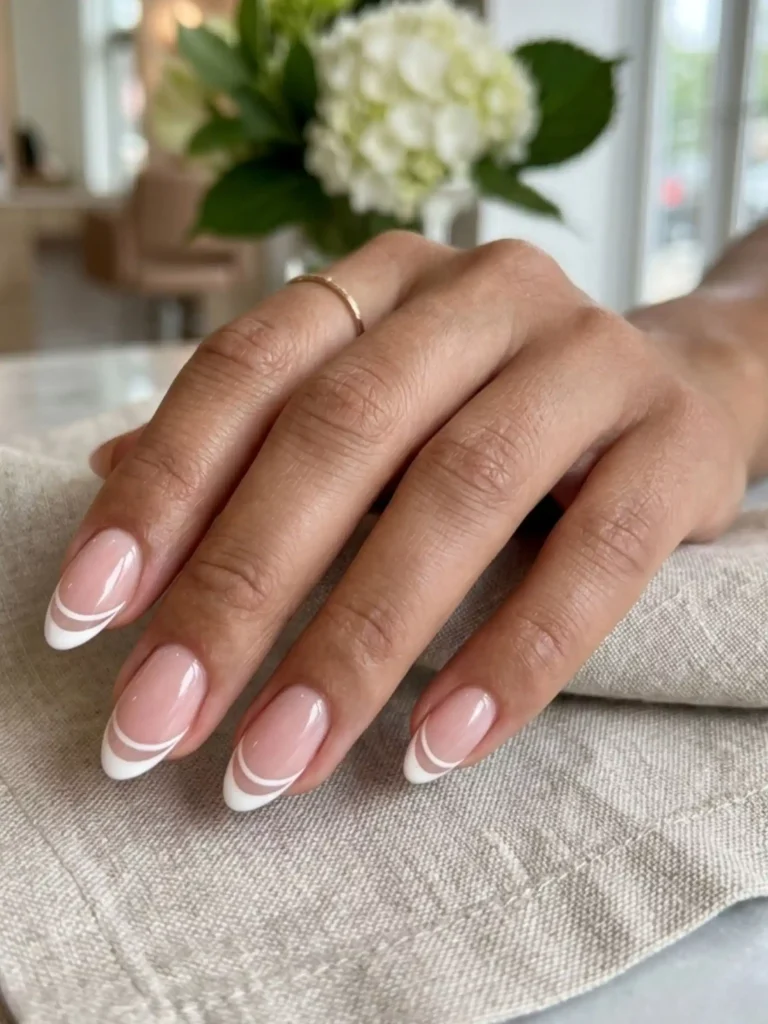
A double-line French draws two slim parallel lines at the tip instead of one solid band, adding subtle dimension.
Best for: squoval and square nails, and detail lovers.
Difficulty: hard.
Tools: a very fine liner brush, two complementary polishes, a top coat.
Keeping both lines equally thin is the whole game, so this rewards a steady hand or a good day. Try one white line and one metallic line for a modern contrast, or two tones of the same colour for something softer. It’s a small detail that makes people look twice.
8. Negative-Space French
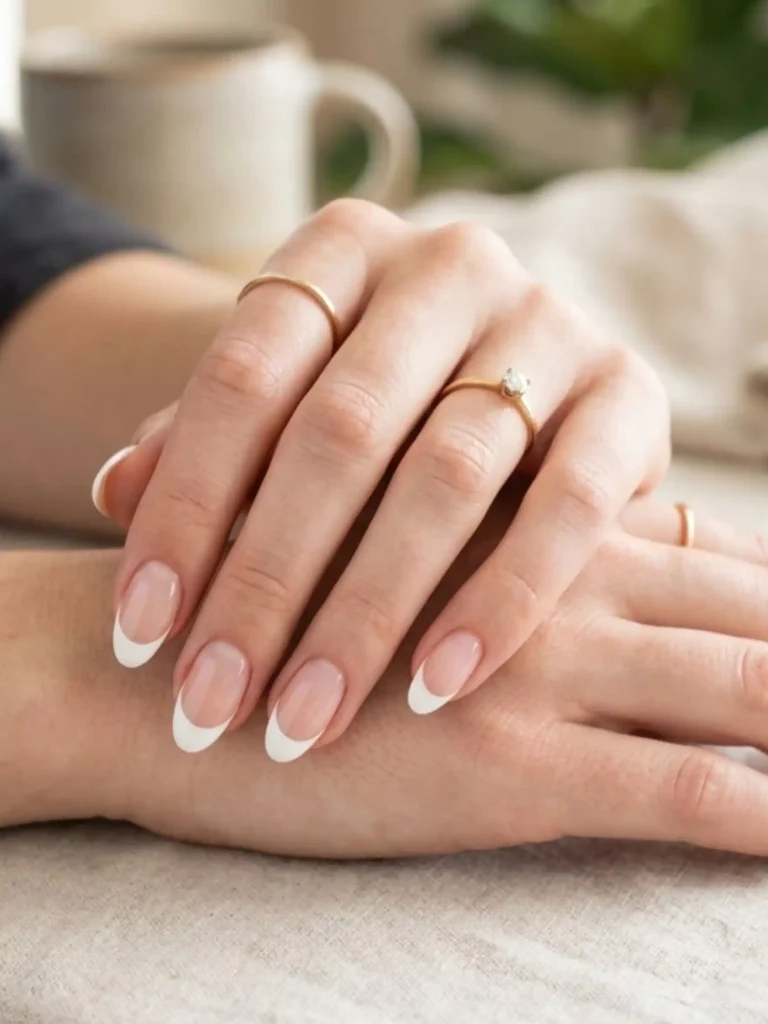
A negative-space French leaves the tip clear or bare with just a defined border, so the natural nail becomes part of the design.
Best for: the clean-girl, barely-there aesthetic.
Difficulty: medium.
Tools: a clear gel or glossy top coat, a thin polish border, buffed natural nails.
Since so much of the nail stays bare, prep matters more than usual – buff and hydrate so the natural surface looks healthy, not neglected. The glassy, almost see-through finish is what gives this its fresh, minimal feel. It’s proof that a modern French can be about what you leave off as much as what you add.
9. Ombré French (Baby Boomer)
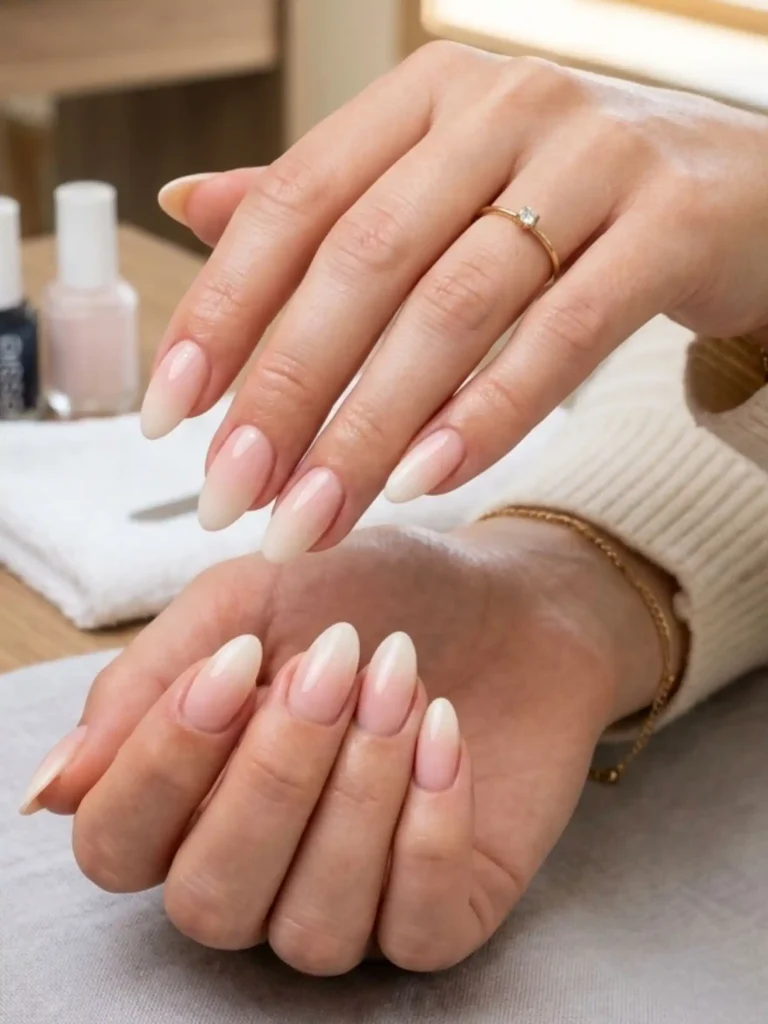
An ombré French, sometimes called “baby boomer,” blends the tip into the base in a soft gradient instead of a hard smile line.
Best for: brides, longer nails, and anyone who finds crisp lines too stark.
Difficulty: hard.
Tools: a makeup sponge or ombré brush, a sheer pink base, a white tip polish.
The seamless fade is what makes this feel luxe and grown-up. A small sponge dabbed at the tip gives that gradient without any harsh edge to get perfect. It’s more forgiving of a slightly-off line than a classic French, since there’s no sharp boundary to compare against.
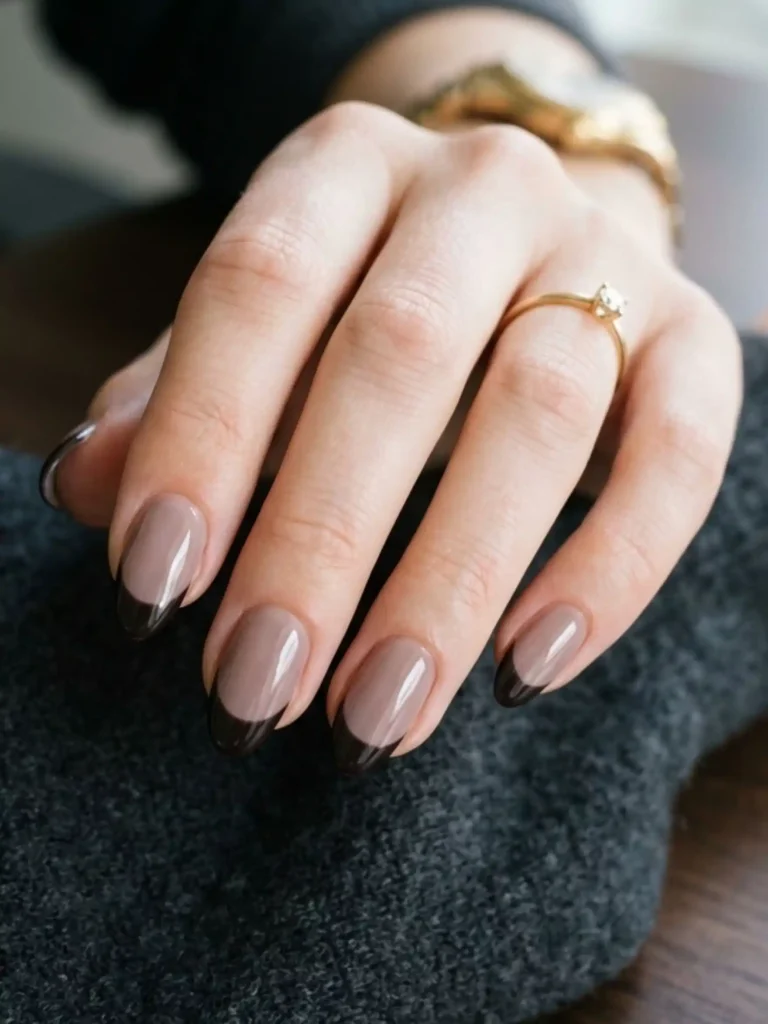
10. Dark Tonal French
A dark tonal French uses moody tips – navy, espresso, burgundy – over a neutral base for a French that works like a rich neutral.
Best for: autumn, winter, and people who want depth without full colour.
Difficulty: easy to medium.
Tools: a nude base, a deep-toned polish, a glossy top coat.
Dark tips feel more polished than a full dark mani but still bring drama. Espresso brown in particular has quietly become the cool-girl alternative to black. Keep the base sheer and neutral so the deep tip stays the focus and the whole thing reads intentional, not heavy.
How to Get Clean Modern French Tips at Home
- Prep first. Push back cuticles, lightly buff the surface, and wipe each nail with polish remover to clear away oils so polish grips.
- Base it. Apply a sheer nude, milky, or pink base and let it dry fully – rushing this is where smudges come from.
- Pick your line tool. Use nail guides or stickers for a curved tip, tape for a V-shape, or a silicone stamper for a fast micro line. A thin liner brush works for freehanding.
- Go thin. Build the tip colour in two light coats rather than one thick one. Thin layers keep the line sharp and modern.
- Clean up. Dip a small brush or cotton swab in remover to tidy any wobbles before they set.
- Seal it. Finish with a glossy top coat over the whole nail so the tip doesn’t chip first, which is exactly where French tips tend to go.
How to Make Them Last
Longevity comes down to two things most people skip: proper prep and daily upkeep. Oil-free nails before you start and a top coat that wraps the very edge of the tip make the biggest difference, since the free edge is where chipping begins. Gel lasts noticeably longer than regular polish here – often two to three weeks – because it cures hard and resists the daily knocks that crack a painted smile line.
After that, it’s small habits. A little cuticle oil each day keeps the skin around the nail looking fresh even as polish grows out, and a fresh layer of top coat mid-week revives the shine, especially on chrome. Try not to use your nails as tools; the tip takes the hit first, and on a French mani, that’s the part everyone sees.
Common Mistakes to Avoid with French Tips
- Making the tip too thick. A heavy band is the fastest way to look dated and to visually shorten the nail. Go thinner than feels natural.
- Skipping the base-coat dry time. Applying your tip over a tacky base drags and smudges the line every time. Wait until it’s truly dry.
- Choosing the wrong shape. A long square with a thick white tip reads old-school; almond or short natural nails carry modern French tips far better.
- Forgetting to seal the edge. If your top coat doesn’t cap the free edge, the tip chips within days. Always run it over the very end.
- Overloading the brush. Too much polish pools and thickens the line. Wipe the brush before each stroke.